
Every camper knows the struggle of finding a rugged solo shelter without breaking the bank, which is exactly where the Alps Mountaineering Lynx 1 shines. You crave the solitude of the backcountry, the silence of a solo trip where the only voice you hear is your own thoughts (and maybe a distant owl). But the barrier to entry is often the gear.
You stare at the price tags of ultralight tents and feel your wallet cringe. You look at the cheap “big box” store tents and know they will collapse in the first gust of wind. You are stuck in the middle, paralyzing yourself with options. This tent aims to solve that problem. It promises to be the durable, reliable, and affordable bridge between backyard camping and serious backcountry exploration.
But is this product really capable of delivering a premium camping experience? Can it withstand a torrential downpour, or will you wake up in a puddle? Is it actually light enough to carry on your back for 10 miles, or is it a car camping tent in disguise? I have taken a deep dive into the specs, user experiences, and structural design of this popular shelter.
In this comprehensive review, I will break down everything you need to know about the ALPS Mountaineering Lynx 1-Person Tent. We will cover the 7000-series aluminum poles, the polyester fly advantages, and how it compares to competitors like the Naturehike Cloud Up 1.
Whether you are planning a solo weekend getaway or prepping your Scout for their first solo night, this review will help you decide if the Lynx is the right companion.
Quick Verdict
The ALPS Mountaineering Lynx 1 is the “Honda Civic” of solo tents: it isn’t the flashiest or the lightest, but it is incredibly reliable, affordable, and will run forever. It offers bombproof weather resistance thanks to a full-coverage polyester fly and aluminum poles, features rarely found at this price point. However, at over 4 lbs, it is heavy for a modern solo tent. It is the perfect choice for beginners, scouts, and moto-campers who prioritize durability over shaving grams.
- Weather Resistance: 4.5 / 5
- Ease of Setup: 4.8 / 5
- Livability/Space: 3.5 / 5
- Durability: 4.7 / 5
- Value for Money: 4.9 / 5
4.4
Overall Score
Pros
✓ 7000-Series Aluminum Poles: Vastly superior strength compared to fiberglass poles found in other budget tents.
✓ Polyester Fly: Resists UV damage and water absorption better than nylon; stays taut in the rain.
✓ Freestanding Design: Can be pitched anywhere, even on concrete or wooden platforms.
✓ Factory Sealed Seams: Ready to use out of the box with excellent waterproofing.
✓ Value for Money: Offers premium features at an entry-level price point.
✓ Ventilation: Half-mesh walls promote excellent airflow, reducing condensation.
Cons
✕ Weight: At 4 lbs 4 oz, it is nearly double the weight of some ultralight competitors.
✕ Small Vestibule: The 10 sq. ft. vestibule is tight for large backpacks and muddy boots.
✕ Interior Height: 36 inches of headroom means you can sit up, but it feels cozy (or cramped) for taller users.
✕ Bulk: The packed size is substantial; it takes up a good chunk of a 50L backpack.
Technical Specifications
| Feature | Specification |
|---|---|
| Product Name | ALPS Mountaineering Lynx 1-Person Tent |
| Base Size | 7’6″ x 2’8″ (2.29m x 0.81m) |
| Center Height | 36 inches (0.91m) |
| Total Weight | 4 lbs. 4 oz. (approx. 1.9 kg) |
| Minimum Weight | 3 lbs. 8 oz. |
| Pack Size | 6″ x 17.5″ |
| Pole Material | 7000 Series Aluminum (8.5mm diameter) |
| Fly Material | 75D 185T Polyester (1500mm coating) |
| Floor Material | 75D 185T Poly Taffeta (2000mm coating) |
| Vestibule Area | 10 sq. ft. |
| Tent Area | 20 sq. ft. |
| Zippers | #8 Extra Large |
What is the ALPS Mountaineering Lynx 1?
The ALPS Mountaineering Lynx 1 is a freestanding, double-wall, 1-person tent. It is designed for three-season camping (Spring, Summer, Fall). It falls into a category often ignored by the outdoor industry: Rugged Entry-Level.
Most 1-person tents today are chasing the “Ultralight” label, shedding every gram possible often at the expense of durability and price. The Lynx 1 takes the opposite approach. It prioritizes a robust structure and thick, durable fabrics. It is designed for campers who don’t want to baby their gear. It is for the camper who might accidentally drop a pocket knife on the floor or brush up against a thorny bush.
Unlike the Naturehike Cloud Up 2, which uses thin silicone-nylon fabrics, the Lynx uses heavy-duty polyester. This makes it a favorite among Scout troops and rental programs because it can withstand abuse that would shred lighter tents.
Detailed Features Breakdown
1. The Pole System: Why Aluminum Matters
One of the most critical features of the Alps Mountaineering Lynx 1 person tent is the pole material. It uses 7000-series aluminum. In the sub-$150 price range, most competitors (like the smaller versions of the Coleman Sundome 4 person tent) use fiberglass poles.
Fiberglass is problematic. It is heavy, it splinters when it breaks (ruining the tent fabric), and it becomes brittle in cold weather. Aluminum, specifically the 7000-series alloy, is lightweight and flexible. Under high wind stress, aluminum will bend rather than snap. This gives the Lynx 1 a “bombproof” feeling in a storm. You can trust this shelter when the wind starts howling at 2 AM.
2. Polyester vs. Nylon: The Fabric War
The Lynx 1 uses a 75D 185T Polyester fly. Many high-end tents use Nylon. Why did ALPS choose Polyester?
- UV Resistance: Polyester is naturally more resistant to UV degradation than Nylon. If you leave your tent set up for days at a base camp, the sun won’t destroy the fabric as quickly.
- Hydrophobic Nature: Nylon absorbs water. When it gets wet, it stretches and sags. This is why nylon tents often need their fly tensioned in the middle of the night. Polyester absorbs significantly less water. The fly on the Lynx 1 stays taut even after 12 hours of rain, maintaining the critical air gap between the fly and the inner tent.
3. Zippers and Hardware
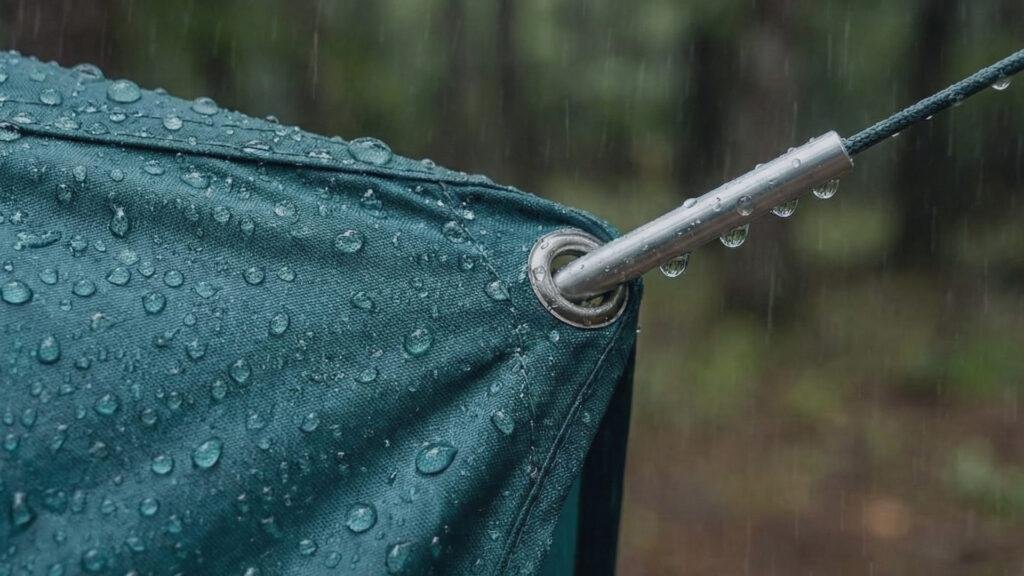
The tent features extra-large #8 zippers. In the world of tents, zippers are the most common failure point. Small, lightweight zippers get clogged with dust and grit, eventually separating. The #8 zippers on the Alps Lynx 1 are chunky and robust. They glide smoothly even when dirty. This adds weight, but it adds years to the lifespan of the tent.
Space and Liveability
Let’s be realistic: it is a one-person tent. It is essentially a nylon coffin that you sleep in. But how liveable is it really?
The Interior Dimensions
The floor measures 7’6″ x 2’8″. This length is excellent. Even if you are over 6 feet tall, you will fit without your head or feet pressing against the mesh (which causes condensation transfer). However, the width is narrow. At 2’8″ (32 inches), there is just enough room for a standard sleeping pad and maybe a book next to you. There is no room to spread out.
Headroom
The peak height is 36 inches (3 feet). This is enough to sit up and change your shirt, but only in the dead center of the tent. Because it is a dome, the walls slope inward quickly. If you are used to the vertical walls of a cabin tent like the Gazelle T4 Hub Tent, this will feel claustrophobic.
Vestibule Storage
The vestibule offers 10 square feet of covered space. This is where your backpack and boots live. It is functional, but tight. If you have a massive 75L pack, it will block your exit. You have to learn the “Lynx Yoga”, unzipping the door and climbing over your gear to get out in the morning.
Weather Resistance and Durability
This is where the Alps Lynx 1 tent truly shines. It punches well above its weight class in terms of weather protection.
Waterproofing
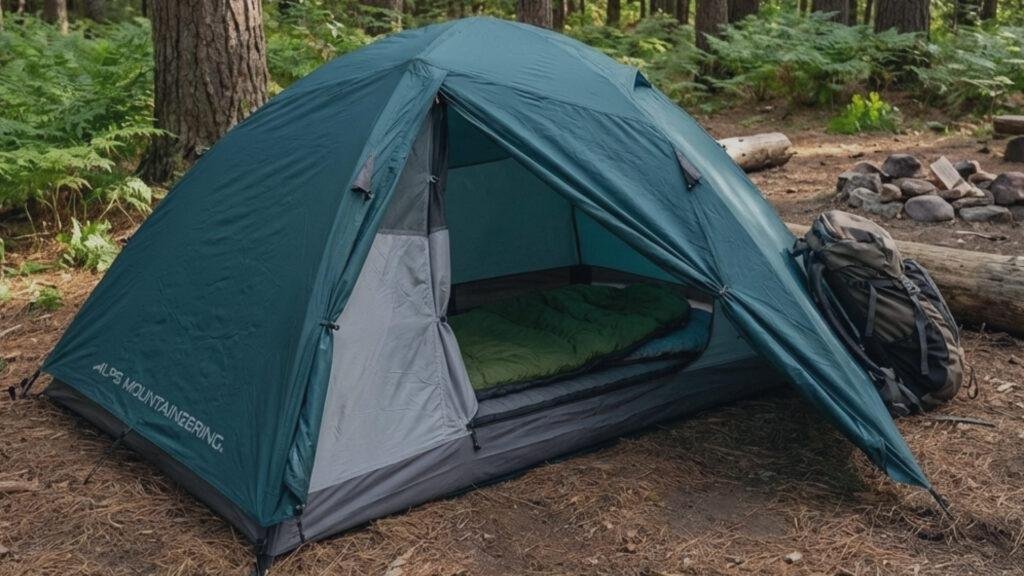
The floor has a 2000mm coating, and the fly has a 1500mm coating. For context, 1000mm is generally considered the baseline for “waterproof.” ALPS goes beyond this. Additionally, the seams are factory-sealed. You do not need to seam seal this tent yourself. Owners consistently report waking up bone-dry after severe thunderstorms.
Wind Stability
The two-pole dome design is aerodynamically efficient. The wind flows over the low profile easily. Because it uses aluminum poles, it flexes with gusts rather than fighting them. If you guy out the tent properly (using the included guy lines), it can withstand significant winds that would flatten taller, boxier tents.
Condensation Management
Small tents are prone to condensation. Your breath hits the cold fly and turns to water. The Lynx 1 mitigates this with half-mesh walls. This promotes a “chimney effect,” allowing warm, moist air to rise and escape through the vents in the fly. While no single-wall tent is immune to condensation, this double-wall design manages it exceptionally well.
Comparison: ALPS Lynx 1 vs. The Competition
ALPS Lynx 1 vs. Naturehike Cloud Up 1
The Cloud Up 1 is the most direct competitor in terms of price.
- Weight: Naturehike wins. It is significantly lighter and packs smaller.
- Durability: ALPS wins. The fabrics are thicker (75D vs 20D or 210T) and the zippers are more robust.
- Freestanding: ALPS wins. The Lynx 1 is fully freestanding. The Cloud Up 1 (older versions) often requires staking out the foot box to maximize volume.
- Verdict: Choose Naturehike for hiking long distances. Choose ALPS for short trips, durability, and rocky terrain where staking is hard.
ALPS Lynx 1 vs. MSR Hubba NX
If you are wondering if you should spend 3x the money on a premium tent:
- Weight: MSR is vastly lighter (under 3 lbs).
- Volume: MSR has better pole architecture (hubbed poles) that creates vertical walls and more interior volume.
- Price: ALPS is a fraction of the cost.
- Verdict: Unless you are a thru-hiker counting every ounce, the ALPS offers 90% of the functionality for 30% of the price.
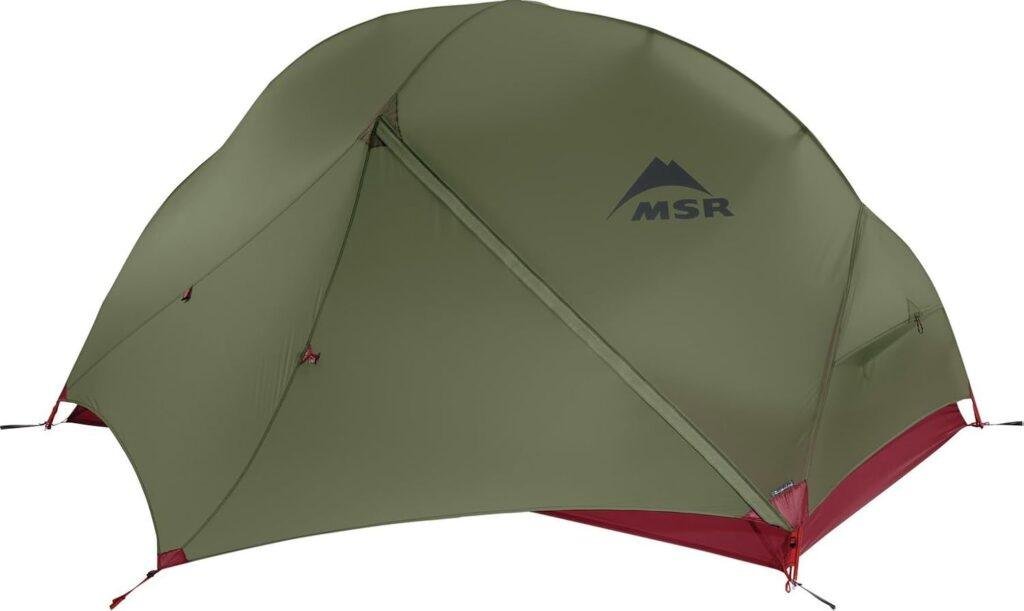
MSR Hubba Hubba NX 2 Tent – 2 Person Tent
ALPS Lynx 1 vs. ALPS Lynx 2
Should you size up?
- Space: The Lynx 2 allows you to bring your gear inside. The Lynx 1 requires gear in the vestibule.
- Weight: The Lynx 2 adds about 1.5 lbs.
- Verdict: If you are solo hiking, stick to the 1. If you are camping with a dog or just want luxury, take the Lynx 2.
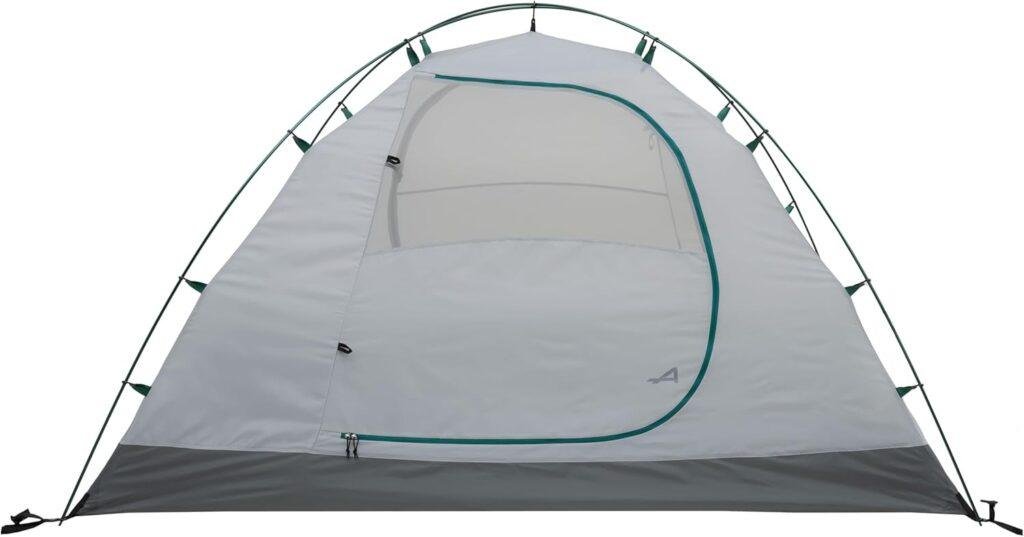
ALPS Mountaineering Lynx 2-Person Backpacking and Camping Tent
Freestanding and sturdy, this is a great scout tent. See how it ranks against ultralight trekking pole tents in our best camping tents guide.
Who is this ALPS Lynx 1 For?
The Scout
This is the definitive Boy Scout tent. It is tough enough to survive being stuffed lazily into a bag, dragged across gravel, and pitched improperly. It is affordable enough for parents but high-quality enough to keep the scout safe.
The Moto-Camper
For motorcycle touring, weight is less of an issue than packed size and durability. The Lynx 1 fits easily in a pannier or strapped to a sissy bar. Its ability to be pitched on concrete pads or gravel lots without stakes makes it ideal for roadside camping.
The “Just In Case” Prepper
If you are asking is tent camping safe and want a reliable emergency shelter for your car trunk or bug-out bag, this is a great choice. It doesn’t degrade in storage as fast as ultra-thin sil-nylon tents.
Setup Guide / How to Use
One of the main selling points is simplicity. Even in the dark, you can set this up in under 5 minutes.
- Site Selection: Find a flat spot. Remove sharp rocks. Lay down your footprint (sold separately, or use Tyvek).
- Pole Assembly: Snap the two shock-corded aluminum poles together.
- X-Frame: Lay the tent body flat. Insert the pole tips into the grommets at the four corners. The poles will cross in the middle forming an ‘X’.
- Clip it Up: This tent uses clips, not sleeves. Simply lift the clips on the tent body and snap them onto the poles. This is much faster and less frustrating than threading poles through sleeves.
- Fly On: Throw the rainfly over the top. Align the vestibule zipper with the door.
- Buckle Down: ALPS uses buckles to attach the fly to the corners. Snap them in and pull the straps to tension.
- Stake Out: Pull the vestibule tight and stake it. Stake out the four corners and the side guys for maximum ventilation and wind stability.
Maintenance and Care
To ensure your Lynx 1 lasts for decades, follow these rules:
Never Store Wet
This is the cardinal rule. If you pack it up wet, mold will grow within 24 hours. Mold eats the waterproof coating and smells terrible. If you must pack it wet, set it up in your garage or yard the moment you get home to dry. Read our guide on how to clean a tent with mold if you make this mistake.
Use a Footprint
Although the floor is a durable 75D Poly Taffeta, sharp rocks can still puncture it. Using a footprint protects the waterproofing and keeps the bottom of your tent clean. If you don’t want to buy the official one, a piece of Tyvek house wrap works perfectly.
Zipper Care
Dirt is the enemy of zippers. If your zipper starts to stick, don’t force it. Clean it with a toothbrush and water. You can apply a silicone zipper lubricant occasionally to keep it running smooth.
ALPS Lynx 1 Tips for Best Use
To get the most out of this Alps Mountaineering Lynx 1 person tent, consider these pro tips:
1. The “Taco” Fold: Packing this tent can be tricky if you just stuff it. The best way is to fold the fly and tent body into a long strip the width of the pole bag. Place the pole bag at one end and roll the tent around the poles like a taco. This creates a tight cylinder that slides easily into the carry bag.
2. Vestibule Management: Since the vestibule is small, bring a large trash bag. If your backpack is muddy or wet, put it inside the trash bag in the vestibule. This keeps your gear dry and prevents mud from getting on your inner tent when you climb out.
3. Upgrade the Stakes: The included aluminum stakes are decent, but for rocky or loose soil, consider upgrading to MSR Groundhogs or similar Y-beam stakes for better holding power.
4. Ventilation Hack: Even if it’s raining, keep the top vents on the fly popped open. The Velcro kickstands are there for a reason. This is your primary defense against condensation.
FAQ: Frequently Asked Questions
By modern ultralight standards, yes. At over 4 lbs, it is heavy. Most ultralight solo tents weigh under 2.5 lbs. However, for short weekend trips or beginners who don’t want to spend $400, the weight is manageable. It is a trade-off for durability and price.
No, the ALPS Mountaineering Lynx 1 usually does not come with a footprint included. You have to purchase the “Floor Saver” separately or make your own ground cloth.
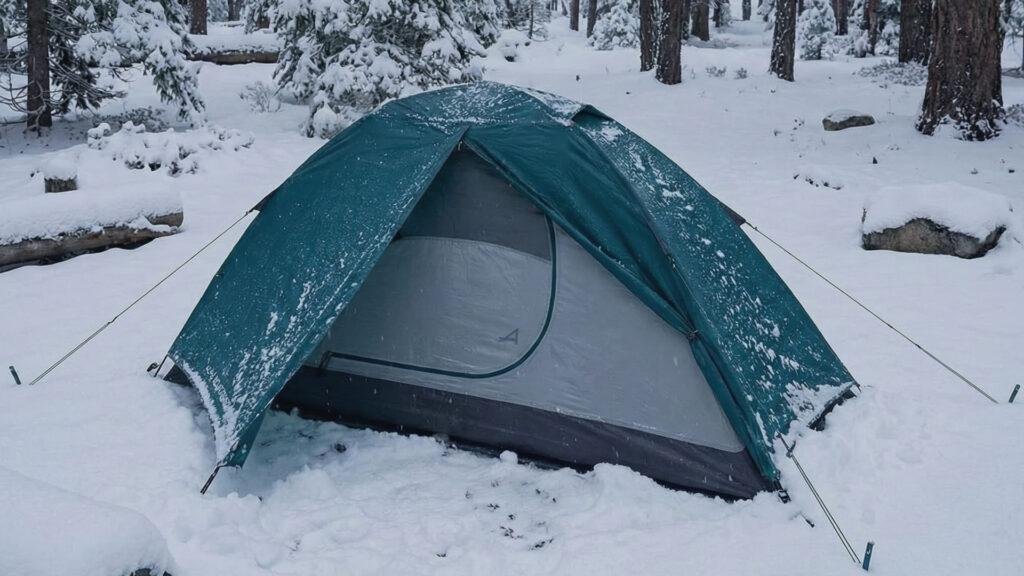
No, it is a 3-season tent. The large mesh panels on the inner tent walls are great for ventilation but will let in spindrift (blowing snow) and cold drafts in winter conditions. It can handle light snow loads due to the aluminum poles, but it is not designed for winter mountaineering.
It depends on the dog. There is virtually no extra floor space once you lay down a sleeping pad. If you have a small dog (under 30 lbs) that curls up at your feet, maybe. For a medium or large dog, you definitely need the Lynx 2.
Yes, the Lynx 1 is fully freestanding. You can set it up on a wooden platform, concrete slab, or solid rock. However, you should always stake out the vestibule to make it usable, which might require using rocks or guy lines if you can’t drive stakes.
Wrapping Up
The ALPS Mountaineering Lynx 1 is a defiant piece of gear. In an industry obsessed with shaving grams at the cost of durability and wallet-health, the Lynx 1 stands firm as a heavy, tough, reliable fortress.
It is not for the Appalachian Trail thru-hiker who cuts the handle off their toothbrush. It is for the person who wants to buy a tent once and have it last for a decade. It is for the camper who wants to sleep soundly through a storm without worrying if their delicate nylon fly will shred.
If you are looking for your first solo tent, a loaner tent for friends, or a reliable shelter for motorcycle adventures, the Lynx 1 is arguably the best value on the market today. It proves that you don’t need to spend a fortune to get high-quality features like aluminum poles and factory-taped seams.