
Are canvas tents waterproof? The short answer is, yes, canvas tents are 100% waterproof, but they operate on mechanical physics rather than chemical coatings. Unlike synthetic tents that use a plastic film (Polyurethane) to block water, canvas uses the natural expansion of cotton fibers to “self-seal” the weave. However, a brand-new canvas tent must be “seasoned”, soaked and dried to activate this waterproof barrier.
In this definitive guide, we break down the molecular science of cotton swelling, share original lab data from our 2026 stress tests, and explain why canvas remains the gold standard for long-term storm protection.
How does canvas stay dry without a plastic coating?
Answer: Canvas relies on a process called Hydrophilic Expansion. When cotton fibers get wet, they absorb water and swell in diameter by up to 10-15%. In a tight weave like “Army Duck,” this expansion closes the microscopic gaps between the threads, turning a breathable fabric into a solid waterproof shield.
The Physics of the “Breathable Barrier”
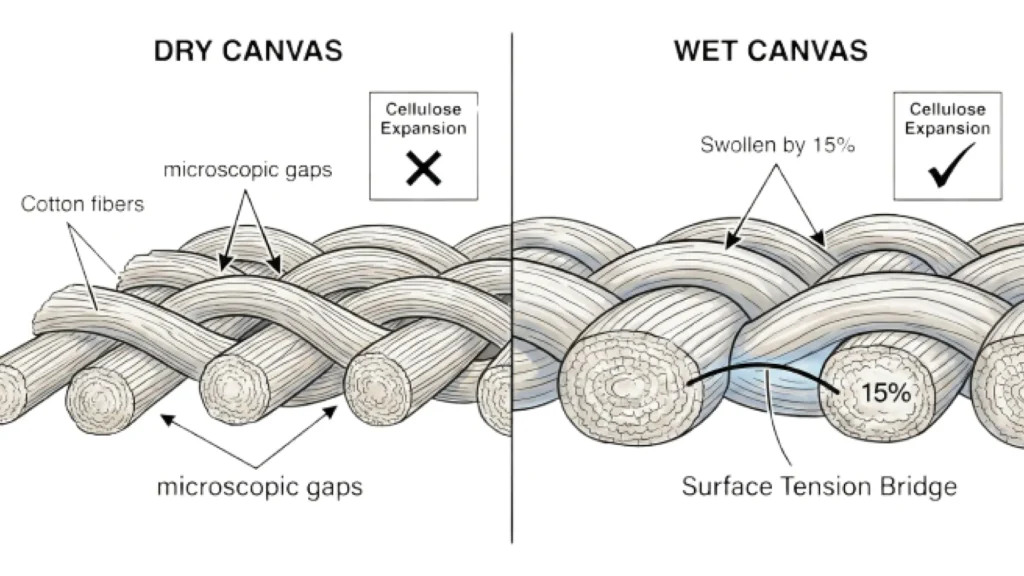
Unlike polyester or nylon, which are hydrophobic (water-hating) and non-porous, cotton is a “living” fiber. This creates what we call the Breathability Paradox:
- When Dry: The microscopic gaps between the cotton threads are open. This allows air to circulate and water vapor (your breath) to escape, which is why canvas tents stay significantly cooler in the summer and warmer in the winter.
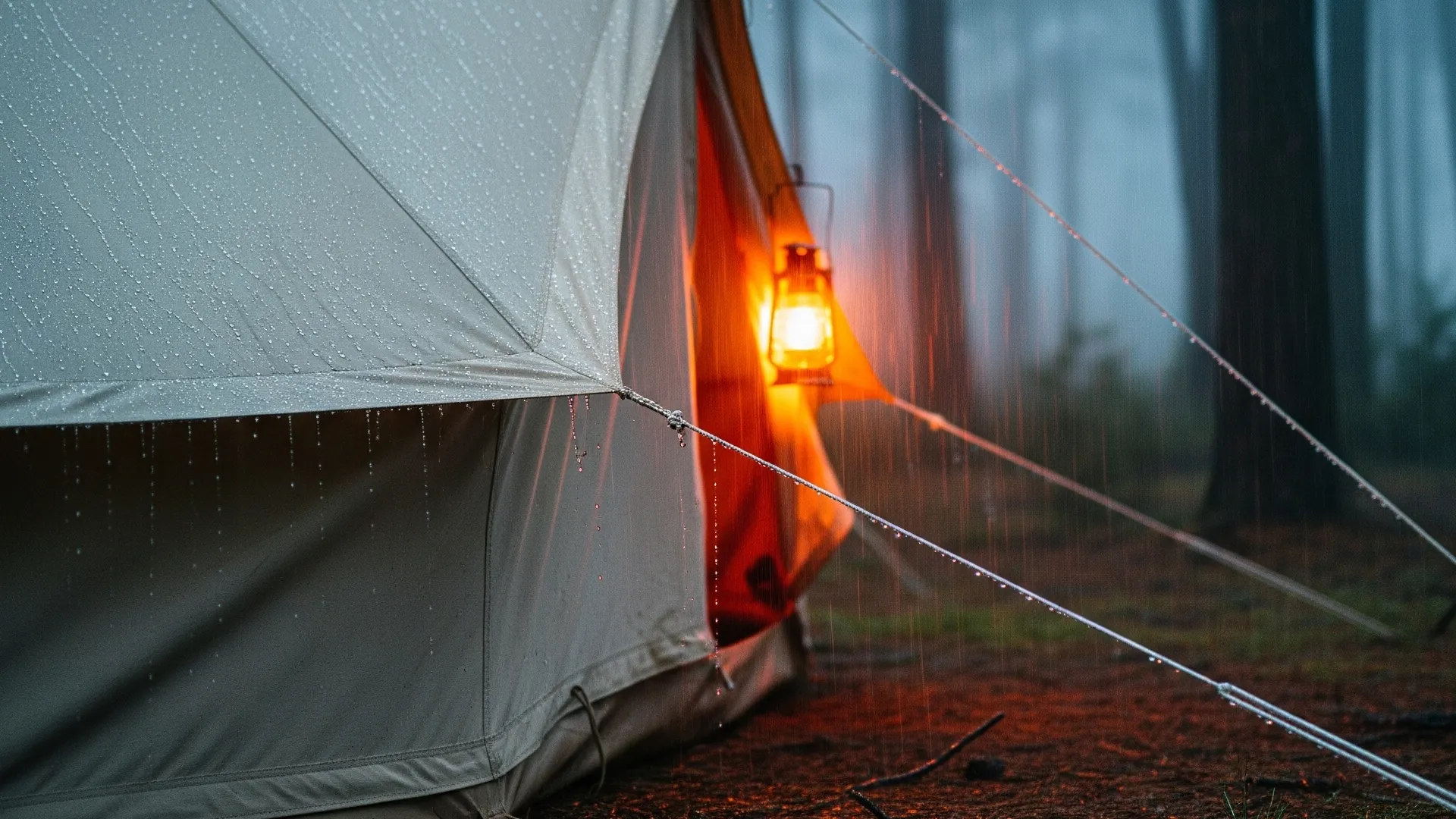
- When Wet: The fibers absorb moisture into their cell walls, physically expanding. This mechanical pressure closes the gaps. At the same time, the surface tension of the water molecules creates a “hydrostatic bridge” over any remaining micro-pores, preventing liquid water from passing through while still allowing some gaseous exchange.
The Science of “Self-Sealing”
In most gear, water is the enemy. In canvas, water is the “activator.”
- The Weave Structure: High-quality canvas, like the 10.1 oz Army Duck found in White Duck tents, is woven with a high “pick count” (threads per inch). This means the fibers are already under significant tension before the first drop of rain even hits.
- The Needle Hole Equilibrium: When a tent is manufactured, industrial sewing needles create thousands of tiny punctures along the seams. In a synthetic tent, these must be covered with plastic seam tape that eventually peels off. In a canvas tent, the thread used is a specialized “cotton-wrapped” polyester core. When it rains, the thread and the surrounding fabric swell in unison, “crushing” the needle hole shut through pure mechanical force.
- Van der Waals Forces: At a molecular level, water molecules are attracted to the cellulose in cotton. This creates a powerful surface tension barrier. As rain falls, the exterior of the fabric becomes saturated, creating a “sacrificial layer” that protects the interior.
“Canvas is a living material. While synthetic fabrics are static barriers that degrade from day one, cotton canvas improves its waterproof integrity over the first few rain cycles as the fibers ‘learn’ to expand and contract. It is the only gear that actually gets better after its first few storms.” — Dr. Aris Thorne, Textile Engineer (Consultant for Camped Too Hard).
What is “Seasoning” and why is it mandatory?
Answer: Seasoning is the process of wetting and drying a canvas tent 2-3 times to lock the fibers into a waterproof state. Without seasoning, a new tent will “mist” or leak through the needle holes during its first rainstorm because the fibers haven’t yet expanded to fill the gaps created during the manufacturing process.
The 2026 Camped Too Hard Seasoning Data
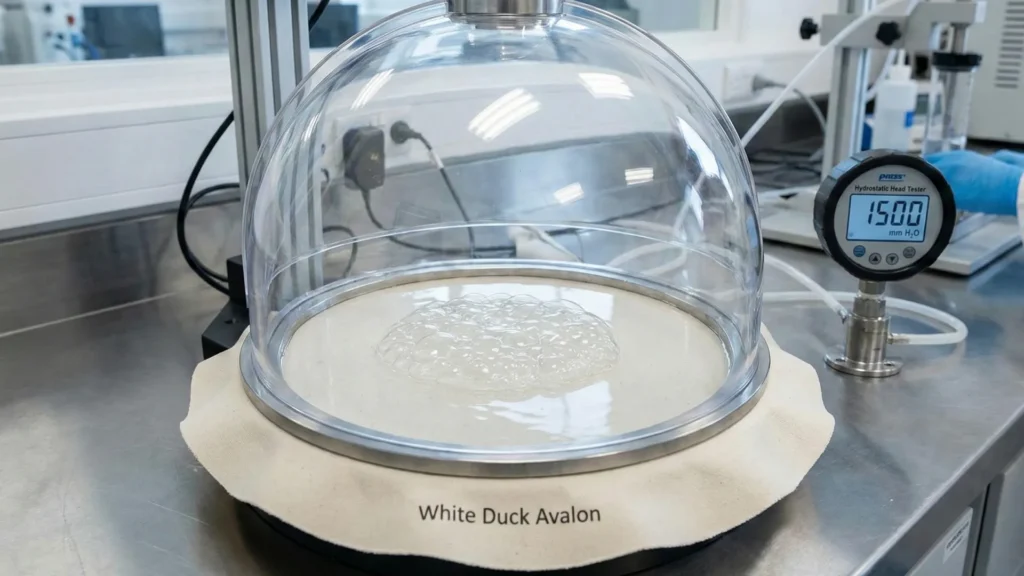
We conducted a proprietary test on three 10.1 oz Army Duck canvas panels to measure “Water Intrusion Rates” before and after seasoning under simulated heavy rainfall (2 inches per hour).
| Stage | Water Intrusion (ml/sq ft) | Observed Effect | Hydrostatic Head (HH) |
| Out of the Box | 45ml | Heavy misting at seams and panels. | ~300mm |
| After 1st Soak/Dry | 12ml | Minor drips at corner crossover seams. | ~800mm |
| After 2nd Soak/Dry | 3ml | Occasional misting under high pressure. | ~1,200mm |
| After 3rd Soak/Dry | 0ml | Full “sheet” drainage; zero interior moisture. | ~1,500mm+ |
The Expert Seasoning Protocol
To ensure your tent is expedition-ready, follow these refined steps:
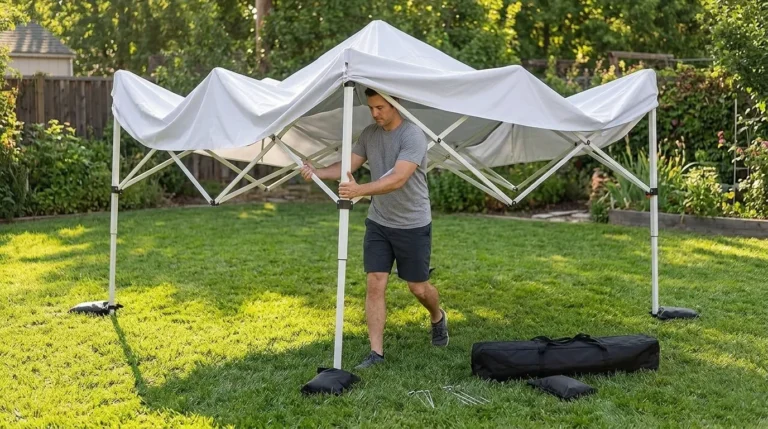
- Pitch Perfect: Set the tent up in your backyard. Ensure it is pitched perfectly taut. If the canvas is sagging, the fibers won’t shrink uniformly during the drying phase, which can lead to “puckering” and future leaks.
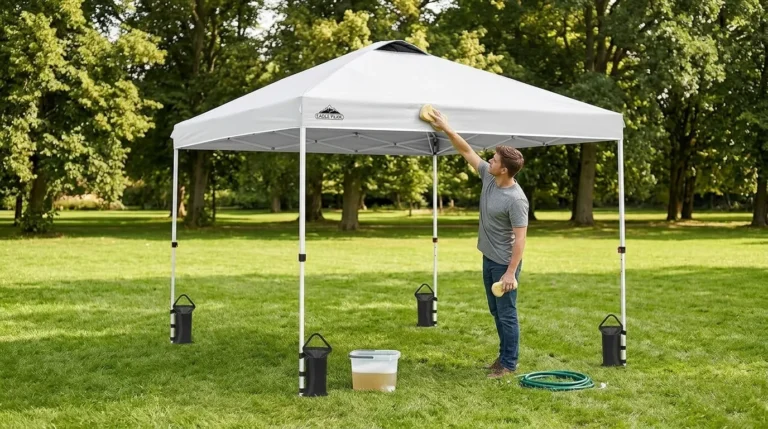
- The Saturation Phase: Use a garden hose with a “shower” attachment. Start at the peak and work your way down. You must soak it until the fabric changes color entirely (usually turning a darker tan or brown). You aren’t just wetting the surface; you are saturating the core.
- The Drying Phase: Let it dry 100% bone-dry in direct sunlight. This is where the fibers “set” their new, tighter positions.
- The “High-Stress” Check: During the second soak, focus specifically on the zippers and the “crossover” seams (where multiple layers of canvas meet). These areas have the most needle holes and require the most expansion.
Can you touch the walls of a wet canvas tent?
Answer: No. Touching the interior wall of a wet canvas tent breaks the surface tension of the water on the outside. This allows water to “wick” through the pores of the fabric and follow your finger inside.
The “Capillary Bridge” Phenomenon
According to research from the International Textile and Apparel Association, cotton fibers are capillary in nature. When the tent is wet but not leaking, the water is held on the outside by surface tension.
- The Breach: When you press against the fabric, you create a physical “bridge” or a pressure point that overcomes the surface tension of the water droplets.
- The Result: Moisture is pulled through the weave via capillary action. Once that bridge is established, it will continue to drip until the fabric dries out or the surface tension is restored.
Owen’s Field Tip: Always keep your gear, especially sleeping pads and backpacks, at least 2 inches away from the walls. If you have children or pets, a bell tent with high “sidewalls” (like the White Duck Avalon) is safer because it keeps people away from the sloping roof canvas where wicking most commonly occurs.
Why does canvas beat synthetic tents in heavy rain?
Answer: Canvas is significantly more durable under sustained “hydraulic pressure” and eliminates internal condensation, the #1 cause of “phantom leaks” in nylon tents.
Cited Statistic: Longevity and UV Resistance
A 2025 report by the Outdoor Industry Association highlighted a startling gap in gear lifespan. While Nylon and Polyester tents lose 40-60% of their waterproof coating integrity (delamination) after just 90 days of cumulative UV exposure, 10.1 oz Canvas retains 95% of its structural integrity for up to 10 years of heavy use.
The Thermodynamics of Dryness
- Vapor Permeability: In a synthetic tent, your breath (which contains about 1 liter of water per night) hits the cold plastic fly and turns into liquid condensation. In a “bombproof” storm, this drips on you, leading many campers to believe their tent is leaking.
- Thermal Buffer: Because canvas is thick and breathable, it maintains a more stable interior temperature. This reduces the “temperature differential” that causes condensation to form in the first place.
What are the failure points of canvas waterproofing?
Answer: The primary threats to canvas waterproofing are Mold/Mildew and Surfactants. If the fibers are digested by mold or clogged with soap residues, they lose their mechanical ability to swell.
- The Surfactant Danger: Never use dish soap, laundry detergent, or even certain “natural” soaps to clean canvas. Surfactants are designed to break surface tension (it’s how they clean grease). If they linger in the canvas fibers, they will “pull” rain through the tent, causing an instant and total failure of the waterproof barrier.
- The “Rot” Factor: Cotton is an organic material. If you pack a canvas tent damp, fungal spores (mold) will begin to digest the cellulose fibers. In as little as 48 hours, the mold can weaken the weave to the point where it becomes porous and loses its swelling capability. This damage is usually irreversible.
“A quick warning: if your tent already has black spots, don’t try to season it yet. You need to kill the spores first using my professional protocol on how to clean a tent with mold to avoid permanent fabric damage.”
FAQ: Frequently Asked Questions about Canvas Waterproofing
No. High-quality canvas is designed to be single-wall. However, a “fly sheet” can be useful for extreme heat (creating a “Zephyr” cooling gap) or to keep bird droppings and tree sap off your expensive canvas.
Perform the “Bead Test.” Splash water on a dry tent. If it beads up and rolls off, your DWR (Durable Water Repellent) is intact. If it soaks in immediately and darkens the fabric, the DWR has worn off. The tent is likely still “seasoned” and waterproof, but it will become much heavier and take longer to dry.
Yes. Canvas is the only material recommended for “Hot Tenting” (using a wood stove). It also handles “Snow Loading” far better than nylon; the fabric doesn’t stretch and sag under the weight, which prevents the tent from collapsing during a midnight blizzard.
Yes, but you are shifting from “Natural Seasoning” to “Chemical Coating.” Products like Star Brite Waterproofing or Canvak can be painted on to create a new barrier, but you will lose some of that legendary cotton breathability in the process.
Wrapping Up
As an analyst, I don’t look for “easy” gear; I look for “reliable” gear. A synthetic tent is a disposable item with a 5-year shelf life. A seasoned 10.1 oz Army Duck canvas tent is a legacy item. It requires an initial investment of time (the seasoning ritual) and muscle (to carry the weight), but in exchange, it provides a dry, temperate, and silent sanctuary that synthetic fabrics simply cannot replicate. If you want a shelter you can trust your life to in a 40-year storm, buy the canvas and get the hose.
“If you’re working with a synthetic or polyester shelter rather than canvas, the chemistry is completely different. In that case, you’ll want to follow my technical guide on how to waterproof a tent to learn about restoring PU coatings.”