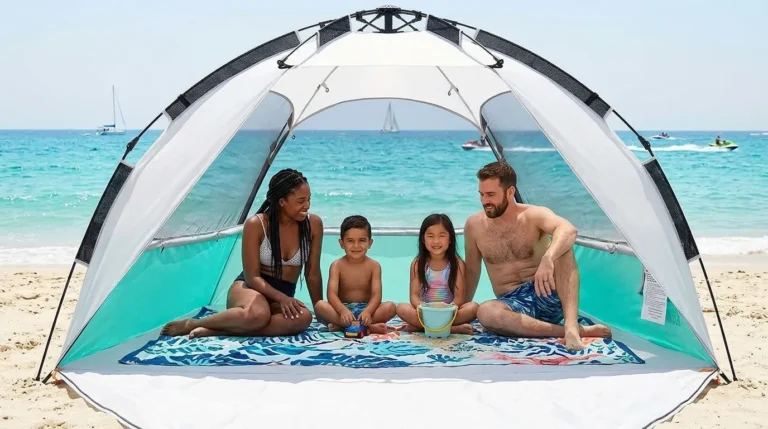
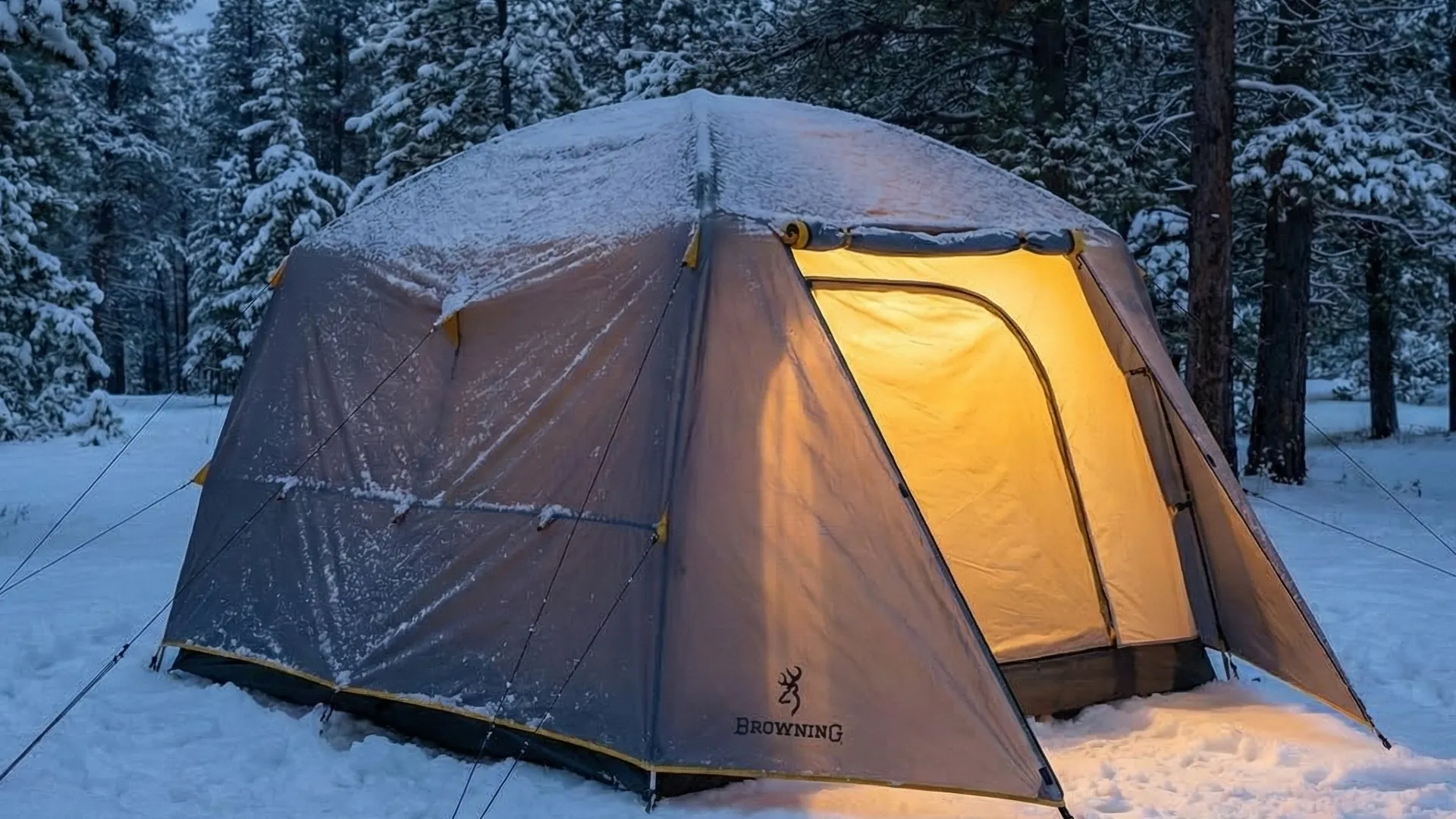

If you are reading this Browning Glacier tent review, you are likely a family camper or a group leader who has hit the limits of standard summer gear. You want to camp in the shoulder seasons, wake up to snow on the ground, or simply feel secure when the wind picks up, but you aren’t ready to spend $1,000 on a mountaineering dome. You need a shelter that bridges the gap between a flimsy department store dome and an Everest expedition bunker.
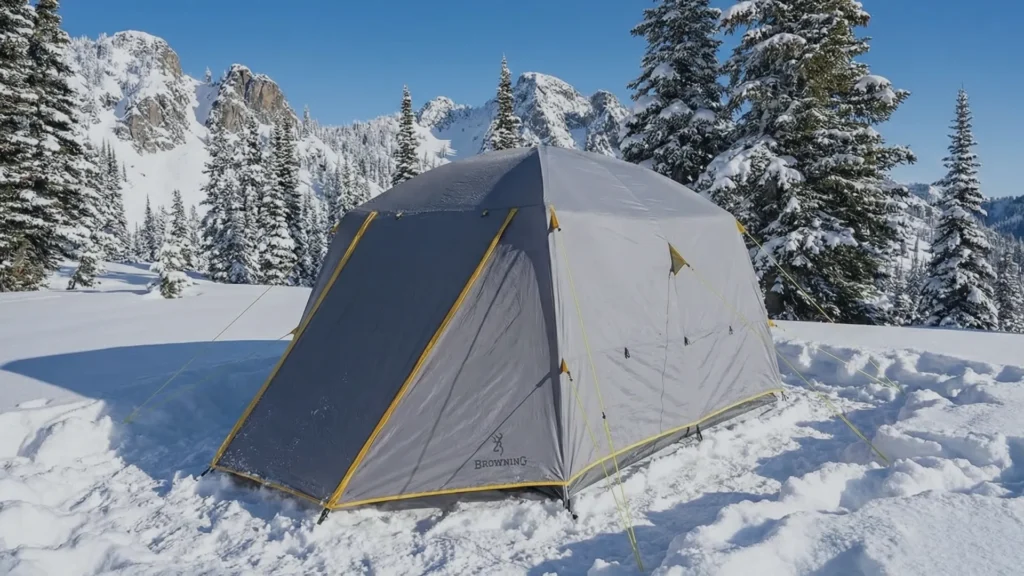
The Browning Glacier tent is designed exactly for this middle ground. It is a heavy-duty, 4-person geodesic-style shelter that prioritizes structural integrity and space over weight savings. With a peak height of 6 feet and a robust pole structure, it promises to be a fortress for families who don’t want to crawl around on their hands and knees.
But is a tent with fiberglass poles really capable of handling a 4 seasons load? Does the 18-pound weight make it too cumbersome for anything but car camping? And how does it compare to other winter-capable options like the Russian Bear Hot Tent or the Alps Mountaineering Tasmanian 2?
In this exhaustive Browning Glacier tent review, we are tearing down every feature of this basecamp beast. We will analyze the 2000mm floor waterproofing, test the livability for a family of four, and see if it truly earns its 4 seasons badge.
Whether you are planning a late-season deer hunt or a winter family retreat, this guide will help you decide if the Browning Glacier tent is the reliable shelter you have been looking for.
Quick Verdict
Ideally Suited For: Families, hunters, and basecampers who need a spacious, storm-worthy tent for car camping in harsh weather (heavy rain, wind, moderate snow) but do not need a lightweight backpacking shelter.
The Bottom Line: The Browning Glacier tent is a tank. It is not sophisticated or ultralight; it is built to stand its ground. The geodesic pole structure creates a rigid frame that handles wind and snow loads significantly better than standard 3 seasons domes.
While the use of heavy fiberglass poles limits its use in extreme sub-zero mountaineering conditions, for 95% of winter campers and hunters, it offers exceptional protection and headroom at a fraction of the cost of premium brands. It is the best value 4 seasons family basecamp currently on the market.
- Weather Resistance: 4.5/5
- Ease of Setup: 3.5/5
- Livability/Space: 5/5
- Durability: 4.5/5
- Portability: 3/5
- Value for Money: 5/5
4.3
Overall Score
Pros and Cons
Before we dive deeper into the technical details of this Browning Glacier tent review, here is a quick snapshot of what makes this tent shine and where it might fall short.
✓ Massive Headroom: With a 6-foot center height, most adults can stand up straight, making it livable for long winter nights.
✓ Geodesic Strength: The 4-pole design creates triangles of strength that shed wind and snow effectively.
✓ Heavy-Duty Materials: 75D polyester fly and 210D Oxford floor are significantly thicker than standard tent fabrics.
✓ Two Vestibules: Large storage areas on both sides keep wet gear out of the sleeping space.
✓ Ventilation: Roof vents and zippered windows allow for airflow management to combat condensation.
✓ Price: It offers 4 seasons geometry for a 3-season price.
✕ Heavy: Weighing over 18 lbs, this is strictly for car camping; you cannot backpack with it.
✕ Fiberglass Poles: While thick (11mm), fiberglass is heavier and less cold-resistant than aluminum found in premium mountaineering tents.
✕ Pole Sleeves: Continuous sleeves are strong but can be difficult to thread alone, especially in the wind.
✕ Stakes: The included stakes are basic steel skewer style and should be upgraded for snow or loose soil.
Product Specifications
| Feature | Specification |
|---|---|
| Product Name | Browning Camping Glacier 4-Person Tent |
| Capacity | 4 Person |
| Base Size | 8 ft x 9 ft |
| Center Height | 6 ft (72 in) |
| Vestibule Depth | 35 inches |
| Tent Area | 72 sq. ft. |
| Vestibule Area | 14 sq. ft. (each) |
| Weight | 18 lbs 10 oz |
| Packed Size | 9″ x 27″ |
| Pole Material | 11mm & 9.5mm Fiberglass |
| Fly Fabric | 75D 185T Polyester (1500mm coating) |
| Floor Fabric | 210D Polyester Oxford (2000mm coating) |
| Doors | 2 |
| Vents | Roof vents |
| Seasonality | 4 Seasons |
Architecture: The Geodesic Advantage
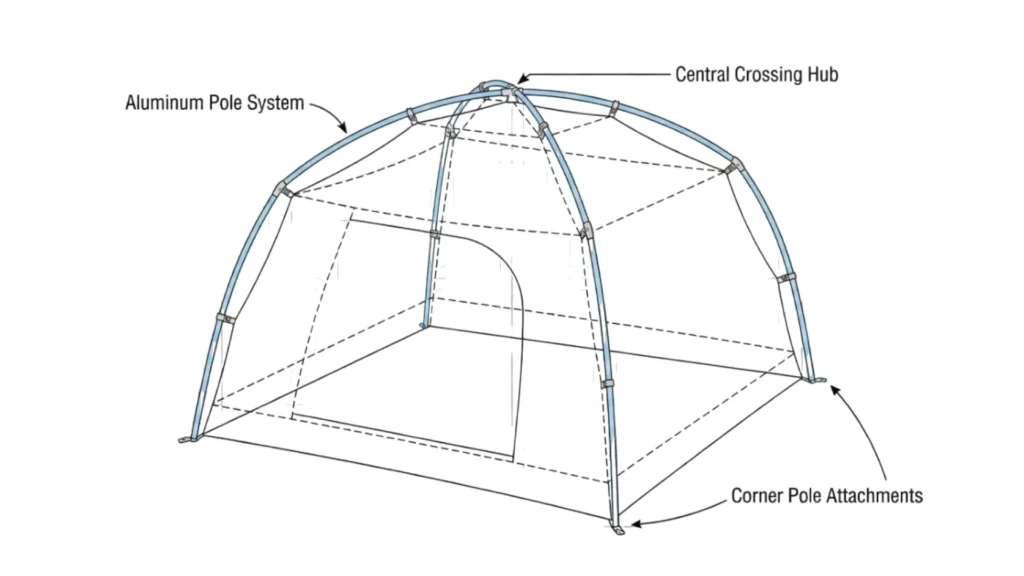
The defining feature of the Browning Glacier tent is its shape. Unlike the simple X-frame of a Coleman Sundome 4 person tent, the Glacier uses a modified geodesic design with four crossing poles.
Structural Integrity
In our 3 season vs 4 season tent guide, we explained that more pole crossings equal more strength. The Glacier features two main poles that cross the roof and two side poles that stabilize the walls. This creates a rigid cage that resists deformation. When the wind hits a standard dome, it flattens. When wind hits the Browning Glacier tent, the force is distributed through the frame.
Snow Shedding
The dome shape is steep. This encourages snow to slide off rather than accumulating on the roof. While the fiberglass poles aren’t as stiff as the aluminum ones on a Black Diamond Eldorado, the sheer thickness (11mm) provides enough static strength to handle moderate snow loads without collapsing. This makes it a viable winter basecamp for forests and valleys, though we wouldn’t pitch it on an exposed alpine ridge where snow loads can reach dozens of pounds per square foot.
Interior Space and Livability
The Browning Glacier camping tent is marketed as a 4 person shelter. In the world of winter camping, where gear is bulky, is this accurate?
The “4 Person” Reality
The floor measures 8 feet by 9 feet (72 square feet).
- For 4 People: You can fit four sleeping pads side-by-side with no room for gear. It is tight but doable for sleeping only.
- For 3 People: This is the sweet spot. You have room for wide pads and duffel bags inside.
- For 2 People: It is a luxury palace. You can set up cots, a small table, and have room to change clothes comfortably.
Standing Room
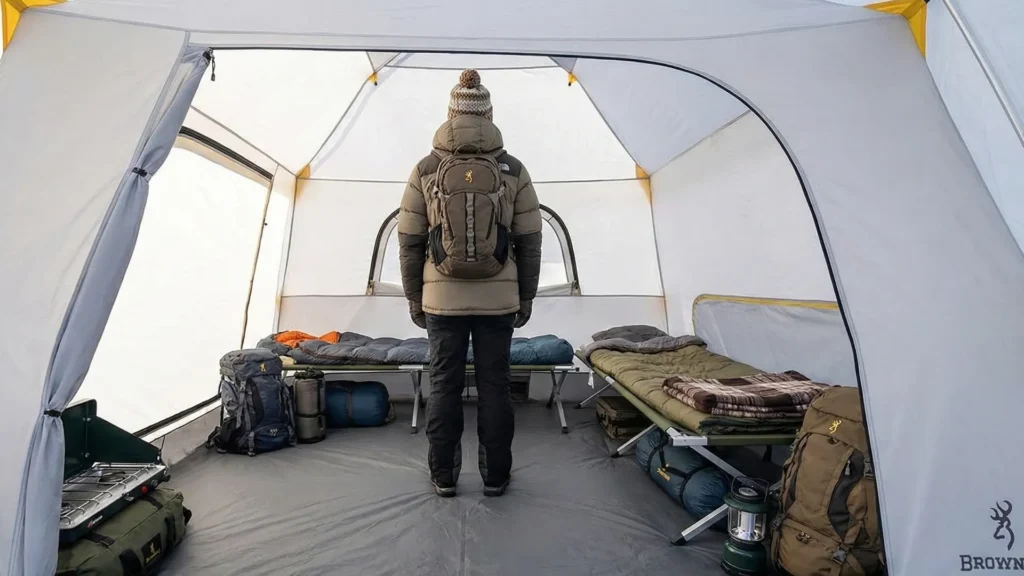
The 72-inch center height is a massive advantage. Being able to stand up to put on ski pants or heavy winter coats changes the entire dynamic of a trip. It reduces cabin fever. Compared to crawling into a low-profile Snugpak Ionosphere, the Glacier feels like a house. This verticality is achieved by the brow poles which pull the walls outward, creating more shoulder room than a typical dome.
Double Doors and Vestibules
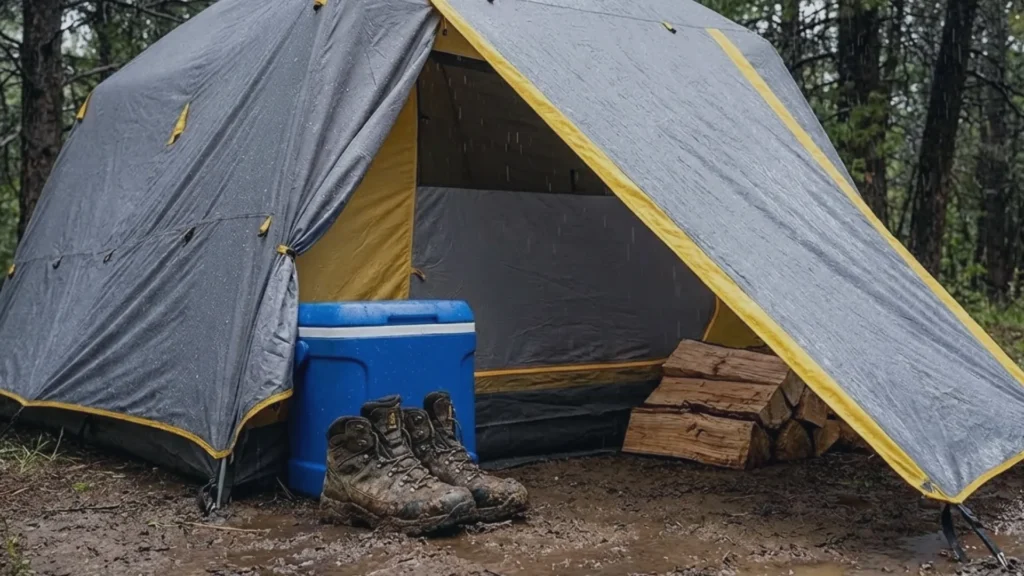
The Browning Glacier tent features two large D-shaped doors, each with its own vestibule. This is critical for family camping. It means occupants don’t have to crawl over each other to exit at night. The vestibules provide 14 square feet of storage each, plenty of room for muddy boots, coolers, and firewood to keep them dry.
Weather Resistance: Is it Winter Ready?
We analyzed the specs to see if the Browning Glacier 4 person tent can handle the elements as well as its name suggests.
Waterproofing
The floor is made of 210D Polyester Oxford with a 2000mm coating. This is a “bathtub” style floor that wraps up the sides. It is thick and durable. You likely don’t need a footprint on grass, though we always recommend one on rock. The fly is 75D polyester with a 1500mm coating. These ratings are solid for winter, where precipitation is often frozen. The factory-sealed seams prevent leaks even during spring thaw conditions.
Wind Stability
The tent attaches to the frame via continuous pole sleeves (not clips). As we noted in our Alps Mountaineering Tasmanian 2 Review, sleeves distribute wind stress much better than clips. This creates a drum-tight pitch that doesn’t flap in the wind. However, you must use the included guy lines. Without guying it out, the high profile will catch the wind like a sail. With guy lines, it is surprisingly stable in 30-40 mph gusts.
Thermal Efficiency
The inner tent body has significantly less mesh than a summer tent. The roof has mesh vents, but the lower walls are solid polyester. This blocks wind chill and traps body heat, making the interior noticeably warmer than a 3-season tent. It strikes a good balance between ventilation and insulation.
The Fiberglass vs. Cold Equation
This is the most controversial part of the Browning Glacier tent review. The poles are fiberglass.
- The Physics: Fiberglass is a composite. In extreme cold (sub-zero), the resin can become brittle. If a fiberglass pole snaps, it shatters into long, sharp splinters that can tear the pole sleeve.
- The Reality: These are not thin 6mm poles found on cheap tents. They are massive 11mm and 9.5mm shock-corded poles. They are incredibly stiff. For car camping and general winter use (down to roughly 10°F), they are perfectly adequate. If you plan to summit peaks or camp in -20°F, you need aluminum. For camping at the trailhead, these are fine and significantly cheaper.
Setup: Mastering the Pitch
This is not an instant tent like the Core 9 person instant cabin tent. The Browning Glacier tent uses a traditional pole-and-sleeve setup.
Step-by-Step Guide
- Layout: Spread the tent out. If pitching on snow, stomp out a flat platform first.
- Thread Poles: Slide the two long main poles through the continuous sleeves crossing the roof. Do not force them; if they snag, wiggle the fabric.
- Raise: Insert pole tips into the pin-and-ring system at the corners. The tent will stand up. This requires some strength to bow the 11mm poles.
- Side Poles: Thread the two side poles to pop out the walls.
- Fly: Throw the rainfly over the top (this can be hard for shorter people due to the height) and buckle it down.
- Guy Out: This is mandatory in winter. Stake out all guy points to triangulate the structure.
Solo Setup?
Can one person set it up? Yes, but it is a wrestling match. The poles are long and heavy. It is much easier with two people. Expect it to take 15-20 minutes your first time. This is a basecamp tent; you pitch it once and stay for a few days.
Winterization Hacks
To get the most out of the Browning Glacier tent in deep winter, consider these modifications:
- Floor Insulation: The floor is thick but cold. Line the interior floor with interlocking foam puzzle mats. This adds R-value and protects the floor from cot legs.
- DIY Snow Skirt: The rainfly does not go all the way to the ground in some spots. You can sew on a 10-inch strip of Tyvek or nylon to the bottom of the fly to create a snow skirt. Pile snow on this to seal out drafts completely.
- Reflective Guy Lines: The black guy lines are invisible at night. Swap them for reflective cord so you don’t trip over them in the dark.
Durability and Materials
Is the Browning Glacier tent built to last?
Fabric
The 210D Oxford floor is a beast. It is twice as thick as the floor on a Big Agnes Copper Spur HV UL 3 tent. It resists dog claws, cot legs, and dropped gear. The 75D fly is standard for heavy-duty tents and resists UV degradation well.
Zippers
The tent uses #10 zippers on the doors. These are large, chunky, and durable. They don’t snag easily and are easy to operate with gloved hands. This is a crucial feature often overlooked in budget tents.
Comparison: Browning Glacier vs. The Competition
To provide a balanced Browning Glacier tent review, we must compare it to its peers in the winter market.
Browning Glacier vs. Coleman WeatherMaster 6
We reviewed the Coleman WeatherMaster 6 recently.
- Choose Coleman if: You are summer camping and want a screen room for bugs.
- Choose Browning if: You expect wind, rain, or snow. The Glacier’s aerodynamic shape handles storms far better than the vertical walls of the WeatherMaster.
Browning Glacier vs. OneTigris Rock Fortress
The OneTigris Rock Fortress is a hot tent.
- Choose OneTigris if: You want to use a wood stove. The Glacier is polyester and cannot safely host a stove.
- Choose Browning if: You want a traditional floor and bug protection. The Glacier is a sealed environment; the OneTigris is floorless (by default).
While the Glacier is a winter beast, it might be overkill for fair-weather camping. To see how it compares to lighter, general-purpose shelters, check out our full roundup of the best camping tents on the market.
Real World Usage Scenarios
The Winter Hunting Basecamp
This is the Glacier’s natural habitat. You drive your truck to the edge of the woods, set up the Browning Glacier tent, and load it with cots and heaters. It provides a warm, dry place to sleep and change. The thick floor handles muddy boots well.
The Family Ski Trip
Pitch this at a winter campground near the ski resort. The height allows you to change into ski gear comfortably. The vestibules hold skis and poles. With a propane heater (used safely), it becomes a cozy retreat.
The Shoulder Season Scout Trip
For Boy Scout troops venturing out in late fall or early spring, the Browning Glacier 4 person tent review consensus is that this is a perfect leader tent. It handles the unpredictable weather of March and November with ease.
Important Considerations Before Buying
Ventilation Management
Because the walls are solid, you must manage the vents to prevent condensation. Keep the roof vents open. If you are using a heater, crack the top of the door zipper. Read our guide on how to clean a tent with mold to understand why keeping the interior dry is vital for longevity.
Not For Backpacking
Do not buy this for hiking. It weighs nearly 19 lbs. If you need a 4 seasons tent to carry on your back, look at the MSR Elixir 2 (split between people) or the Naturehike Cloud Up 2 for lighter loads.
Heating
This tent does not have a stove jack. Do not cut one; the polyester will melt. You can use a catalytic propane heater like a Mr. Heater Buddy, but ensure you follow all safety protocols.
Maintenance and Care
To keep your Browning Glacier camping tent performing for years:
- Dry It Out: Never store it wet. The PU coating will rot. If you pack it wet, set it up in your garage immediately upon return.
- Pole Care: Fiberglass can splinter. Check the ferrules (metal connectors) for cracks before every trip.
- Seam Sealing: The factory tape is good, but for winter use, we recommend applying extra seam sealer to the floor corners and fly seams.
- Storage: Store it loosely in a breathable bag, not compressed in the stuff sack.
Field Repair Guide
Even the best tents fail. Here is how to fix the Glacier in the field:
- Pole Splint: The tent usually comes with a repair sleeve (a small metal tube). If a fiberglass pole snaps, slide this tube over the break and tape it in place heavily with duct tape.
- Tear Repair: Carry Tenacious Tape. If you snag the fly, apply tape on both sides of the tear.
- Zipper Lube: If zippers freeze, do not force them. Warm them with your hands or use a silicone zipper stick.
Frequently Asked Questions (FAQs)
It handles moderate snow loads well due to the geodesic shape. However, because the poles are fiberglass, we recommend knocking heavy accumulation off the roof periodically during a blizzard to prevent stress fractures.
Yes, but it is challenging due to the pole length and sleeve friction. It is much easier with two people.
Yes. The 8×9 foot floor easily accommodates a queen air mattress with plenty of room to walk around it.
Yes. The solid wall construction blocks wind chill and traps a layer of dead air between the tent and the fly, making it significantly warmer than a mesh-body tent.
No, a footprint is usually sold separately. Given the heavy-duty 210D floor, you can get away without one on grass or snow, but we recommend a simple tarp for rocky ground.
Wrapping up
The Browning Glacier Tent is the undisputed champion of value in the 4-season family market. It brings the bombproof geometry of expedition tents to the family camper at an accessible price point.
It sacrifices weight (heavy fiberglass poles) to gain durability and affordability. For the car camper, hunter, or family looking to explore the outdoors year-round, this trade-off is well worth it. It provides a level of security and space that standard domes simply cannot match.
If you want a fortress that will keep your family dry and safe when the weather turns, the Browning Glacier Tent is a fantastic investment.