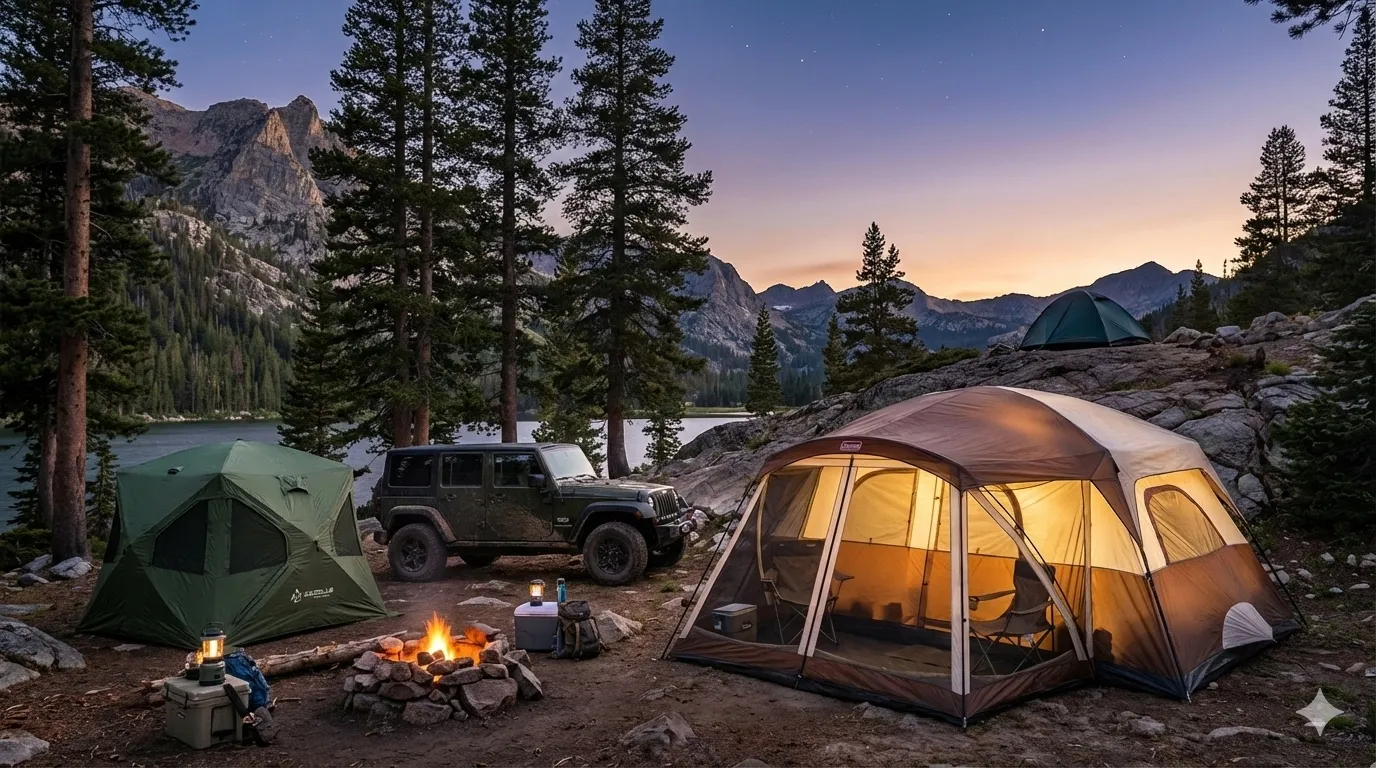

Finding the best camping tents is often an exercise in frustration. You are bombarded with nebulous terms like “10-person capacity” (which usually means 5 people comfortably), “seasonality” that does not account for wind chill, and “water-resistant” claims that often translate to “will leak in a downpour.” We have cut through the spec-sheet noise to identify the tents that actually perform in the field.
Whether you need a 60-second setup to save your marriage or a bombproof shelter for overlanding, your tent is the single most critical investment for your trip. A bad tent turns a rainstorm into misery; a good one turns it into a memory. It is your bedroom, your storm shelter, and your home base.
In this exhaustive guide, we analyze the top 10 tents for 2026 across every major category. We evaluated them on livability (vertical walls vs. sloped domes), storm-worthiness (pole geometry and hydrostatic head), setup friction, and long-term durability.
We also provide direct links to our in-depth single product reviews if you need to drill down further. This guide is designed to be the only resource you need to make a confident decision.
Best Camping Tents: Top Picks
If you do not have time to parse the physics of polyester and aluminum alloys, here is the cheat sheet. These are the winners based on specific use cases.
| Model | Category | Setup Time | Peak Height | Weather | Price |
|---|---|---|---|---|---|
| Core 9 Person Instant | Best Instant Family Tent | 60 Seconds | 78″ (6.5′) | Fair Weather | Amazon |
| Coleman WeatherMaster 6 | Best Tent w/ Screen Room | 20 Mins | 80″ (6.6′) | Moderate | Amazon |
| Coleman Skydome 6 | Best Value Family Dome | 10 Mins | 72″ (6.0′) | Moderate | Amazon |
| Ozark Trail 6 Person | Best Ultra-Cheap Tent | 15 Mins | 66″ (5.5′) | Light Rain | Amazon |
| Gazelle T4 Hub | Best Pop-Up Hub Tent | 90 Seconds | 78″ (6.5′) | Heavy Duty | Amazon |
| Coleman Sundome 4 | Best Budget Starter Tent | 10 Mins | 59″ (4.9′) | Moderate | Amazon |
| Teton Mesa Canvas | Best Canvas Glamping | 15 Mins | 78″ (6.5′) | 4-Season | Amazon |
| Naturehike Cloud Up 2 | Best Budget Backpacking | 5 Mins | 40″ (3.3′) | High Wind | Amazon |
| Naturehike Cloud Up 1 | Best Solo Ultralight | 5 Mins | 39″ (3.2′) | High Wind | Amazon |
| ALPS Lynx 1 | Best Beginner Freestanding | 5 Mins | 36″ (3.0′) | 3-Season | Amazon |
How We Tested & Rated These Best Camping Tents
We believe that transparency is key to trust. We did not just look at the weight and floor area on Amazon. To make this best camping tents list, a tent had to pass a stricter set of real-world criteria designed to expose weaknesses that only appear after days of use in the field.
1. The “Elbow Room” & Livability Factor
Manufacturers notoriously lie about capacity. They calculate “person count” by seeing how many standard sleeping pads (roughly 20 inches wide) can fit on the floor with zero inches between them. This is an unrealistic metric for anyone except extreme mountaineers.
- Our Metric: We evaluated tents on usable space. We looked for vertical walls that allow you to stand up and change clothes without contorting your spine. We penalized tents with aggressive slopes that render the edges of the floor useless for anything other than storing socks. A tent rated for 6 people should comfortably fit 4 people on air mattresses with walking room. We physically tested floor plans with queen-sized air mattresses to see if they actually fit, rather than trusting the dimensions on the box.
2. Setup Friction Score
Camping should be relaxing, but setup is often the most stressful part of the trip. A “10-minute setup” claim often assumes you have memorized the manual and have perfect weather.
- Our Metric: Can one person pitch it while holding a beverage? If a tent requires complex pole threading, cryptic instructions, or excessive force to clip hubs, it lost points. We prioritized intuitive, color-coded, or instant designs. We timed setups not on the “best run,” but on the “first run” to simulate a realistic experience for a new user. We also evaluated “takedown friction”, how hard is it to get the tent back into the bag? (Spoiler: The Gazelle T4 wins this easily; the Ozark Trail struggles).
3. Hydrostatic Reality & Storm Worthiness
Waterproofing is science, not magic. It comes down to the Hydrostatic Head (HH) rating, seam construction, and pole geometry.
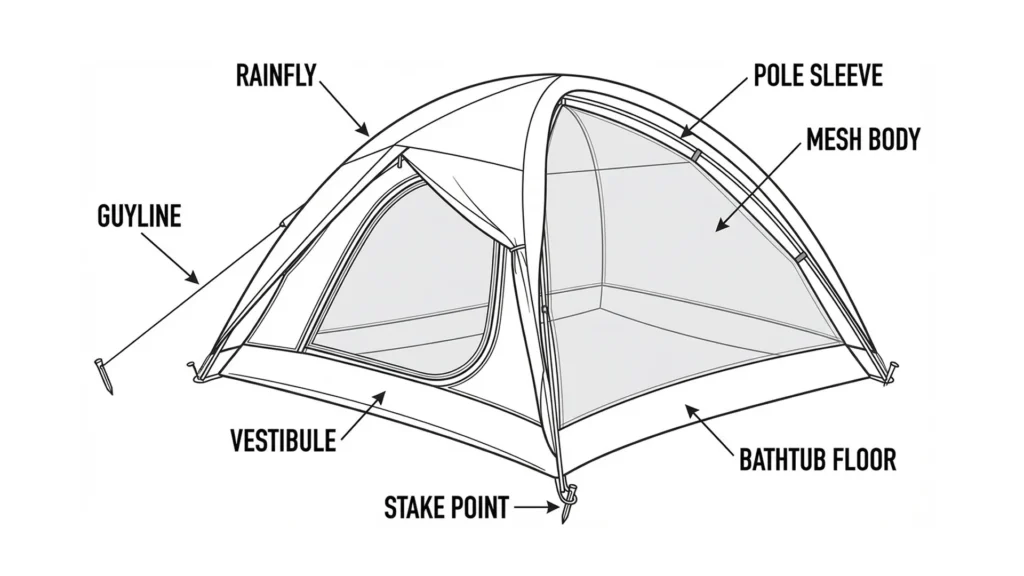
- Our Metric: We looked beyond the marketing claims to the actual fabric denier and coating thickness. We favored tents with full rainflies over “toupee” style flys that leave windows exposed to sideways rain. We examined guy-out points to see if the tent could actually withstand a 30mph gust or if it would collapse under pressure. We specifically looked for “bathtub floors” (floors that wrap up the sides) and taped seams, which are critical for preventing leaks during prolonged rain.
4. Value vs. Cost
- Our Metric: A $600 tent should be perfect. A $100 tent just needs to work. We graded heavily on value-for-money. We asked: “Is the extra $200 for aluminum poles worth it for a car camper?” In many cases, the answer is no, and we highlight exactly when you should save your money. We considered the longevity of materials: will this tent last one season or ten?
Best Large Family Tents (6+ People)
For families, space is sanity. You need room for air mattresses, gear duffels, and a buffer zone between siblings. These tents prioritize vertical walls and massive floor plans over weight savings. If you are wondering how to make tent camping more comfortable for a reluctant spouse, starting with a large, standing-height tent is the definitive answer.
1. Core 9 Person Instant Cabin Tent
Category Winner: Best Instant Tent for Families
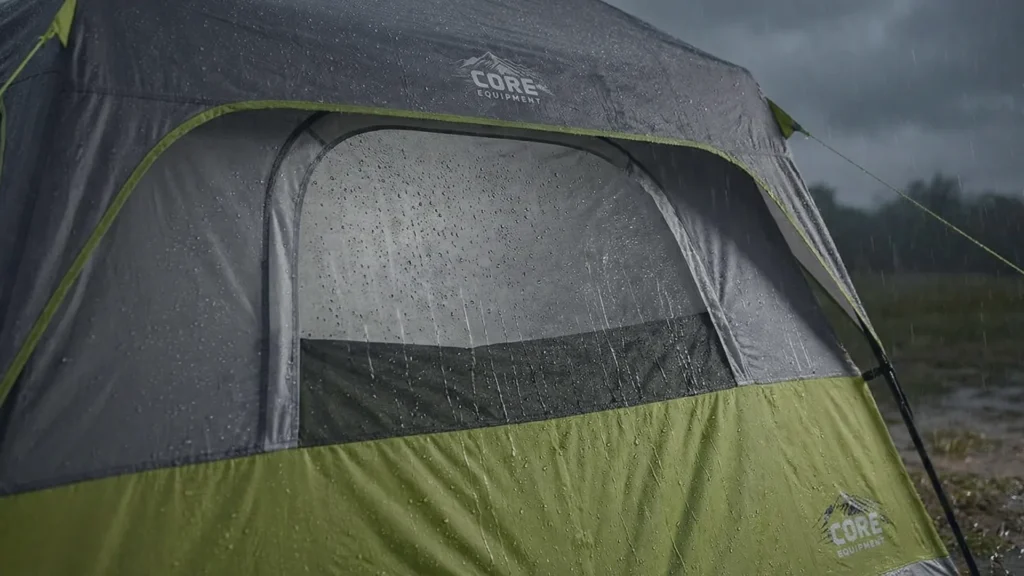
If you dread the argument-inducing pole wrestling match that usually starts a camping trip, the Core 9 Person Instant Cabin is your solution. It is not the most weather-resistant tent here, but it is unequivocally the easiest to live with. It has become the industry benchmark for “stress-free camping.”
Technical Specifications
- Floor Size: 14 ft x 9 ft
- Center Height: 78 in (6.5 ft)
- Pole Type: Telescoping Steel
- Pack Weight: 30.5 lbs
- Setup Mechanism: Instant Hub
Architecture & Design
The Core 9 targets the casual camper who wants to maximize leisure time. The architecture is a “Cabin” style, meaning the poles go straight up from the corners rather than curving inward like a dome. This creates a room-like feel where you can walk from corner to corner without ducking. The 14 by 9 foot floor plan is massive, easily accommodating two queen air mattresses with a central aisle for walking.
The “Instant” Reality
The genius of this tent lies in its telescopic steel poles which are pre-attached to the tent body. You simply unfold it like a giant spider, extend the legs until they click, and you are done. In our analysis, we found that a single person can pitch this massive structure in under 60 seconds. Taking it down takes slightly longer (about 5 minutes) because you have to squeeze the air out of the fabric to fit it back into the bag, but it is still lightyears faster than threading poles through sleeves.
Field Notes: Performance & Living
- Ventilation: It features a massive mesh ceiling and an advanced ground vent system. This creates a chimney effect, pulling cool air in from the bottom and pushing hot air out the mesh roof. This is absolutely critical for summer camping, as large polyester tents can easily become ovens in direct sunlight. The T-door is massive, allowing great airflow when open.
- Weather Resistance (The Catch): This is a fair-weather tent. The rainfly is minimal, covering only the roof (a “cap” fly). In a serious storm with horizontal rain, water can blow against the exposed single-wall windows. It relies on H20 Block Technology (water-resistant fabric coatings) rather than a physical barrier. It handles vertical rain fine, but exposed ridgelines in a storm are its kryptonite.
- Durability: The steel poles are robust, but the locking mechanisms can become sticky with sand or grit. Keeping them clean is essential. The floor material is a standard polyethylene tarp; using a footprint is highly recommended to prevent punctures from rocks.
Core 9 vs. Coleman Instant Cabin
While Coleman makes a similar 10-person instant tent, the Core 9 wins on ventilation. The Core’s adjustable ground vents are superior to Coleman’s sealed-floor design, making the Core significantly cooler in July and August. The Core also tends to have slightly better interior pockets for organization.
Verdict
Buy this if you camp in fair weather (state parks in summer) and prioritize setup speed above all else. Avoid it if you frequent windy environments or shoulder seasons where heat retention matters.
Read the full review: Core 9 Person Instant Cabin Tent Review
2. Coleman WeatherMaster 6 Person Tent with Screen Room
Category Winner: Best Tent with Screen Room
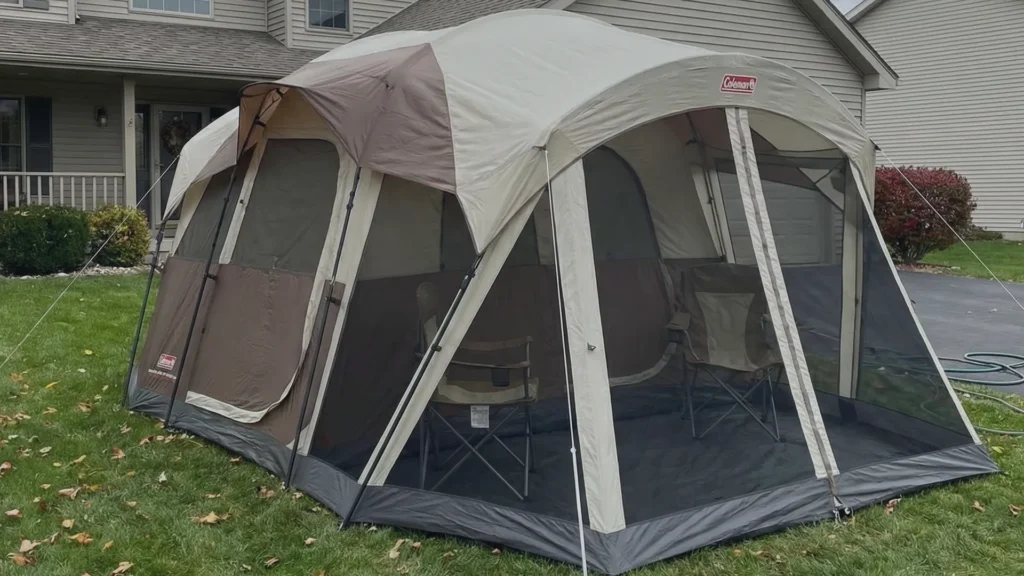
Bugs ruin trips faster than rain. At number 2 in our best camping tents list, the Coleman WeatherMaster 6 solves this specific pain point with a floorless screened porch attached to the front. It essentially gives your tent a living room, solving the claustrophobia often felt in standard tents during bug season.
Technical Specifications
- Floor Size: 11 ft x 9 ft (Main Room) + 9 ft x 6 ft (Screen Room)
- Center Height: 80 in (6.6 ft)
- Pole Type: 19mm Steel & 11mm Fiberglass
- Pack Weight: 32 lbs
- Special Feature: Hinged Door
Architecture & Design
This tent is a hybrid structure. The sleeping area is a modified cabin/dome structure, utilizing steel legs for stability and fiberglass roof poles for flexibility. The screen room is a tunnel extension. This unique geometry gives it excellent stability in the rear (sleeping area) and a spacious, airy feel in the front.
The Hinged Door Advantage
We cannot overstate the value of the rigid hinged door. Instead of fumbling with zippers 50 times a day, the door swings open and sticks shut with velcro strips. For families with children who never remember to zip doors shut, this feature is a trip-saver. It keeps mosquitoes out of the sleeping bay simply by swinging shut behind you. This also dramatically reduces zipper wear-and-tear, which is the most common failure point on family tents.
Field Notes: Performance & Living
- Space: The main room sleeps 4 comfortably (or 6 tightly). The screen room adds significantly to the usable footprint but is not for sleeping (it has no floor and rain will blow in). It serves perfectly as a dining area, a card-playing lounge, or gear storage for wet boots.
- Weather: The “WeatherTec” system with welded floors is genuinely good at keeping ground water out, a common failure point in cheaper tents where needle holes in the floor allow seepage. However, the screen room is the weak link in a storm. Rain will enter the porch area through the mesh, so do not store dry sleeping bags or clothing there.
- Setup: It uses a traditional fiberglass pole setup. It takes about 20 minutes and can be finicky compared to the Core 9. You have to thread poles through sleeves, which can be frustrating for shorter campers trying to reach the roof. The color-coded poles help, but it is undeniably a two-person job.
Livability Score: 9/10
The vertical walls and 6 foot 8 inch center height mean even tall dads can stand up. The separation of sleeping and lounging spaces reduces cabin fever on rainy days, providing a psychological break between the bedroom and the outdoors.
Verdict
The best choice for buggy campgrounds where you want space to lounge, not just sleep. If mosquitoes are your primary enemy, this is your fortress.
Read the full review: Coleman WeatherMaster 6 Review
3. Coleman Skydome 6 Person Tent
Category Winner: Best Value Family Dome
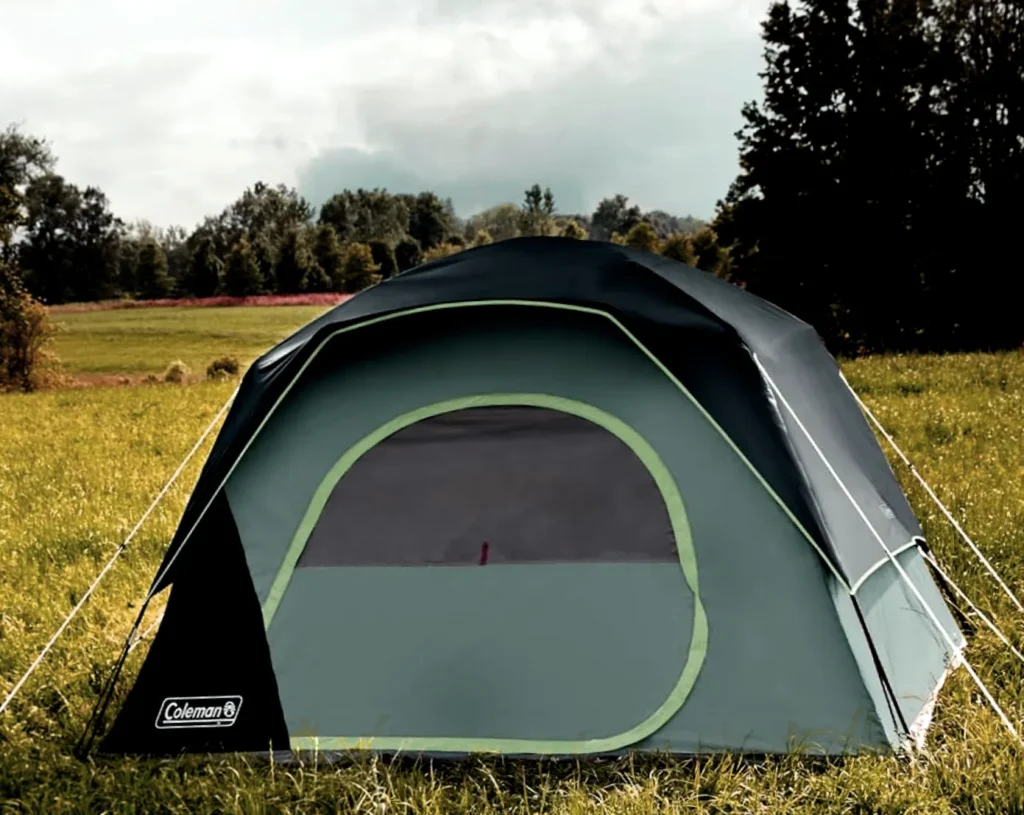
The Coleman Skydome 6 is at number 3 in our best camping tents list. It’s the modern replacement for the classic dome tent. Coleman realized that traditional domes have wasted space due to sloped walls, so they engineered the Skydome with steeper poles to give you 20% more headroom without significantly increasing the price.
Technical Specifications
- Floor Size: 10 ft x 8.5 ft
- Center Height: 72 in (6 ft)
- Pole Type: Fiberglass (Pre-attached)
- Pack Weight: 17.6 lbs
- Door: Wide Door Design
Architecture & Design
Traditional domes are aerodynamic but claustrophobic. By changing the angle of the pole attachment points at the corners, Coleman created “near-vertical” walls for the first few feet of height. This allows you to place cots closer to the edge of the tent without the fabric hitting your face while you sleep. The frame is simple but effective, utilizing shock-corded fiberglass poles that are pre-attached to the tent body to prevent loss.
Field Notes: Performance & Living
- Wind Resistance: Because it retains a dome shape, it sheds wind better than the boxy Core or WeatherMaster tents. If you camp in exposed areas, this aerodynamic profile is a safety feature. The wind flows over it rather than hitting it like a brick wall.
- Setup: The poles are pre-attached to the corners (though not fully instant). You unfold the tent, snap the poles together, and clip the tent body to them. It prevents lost parts and speeds up the pitch to under 10 minutes. It is a “Fast Pitch” system that actually works.
- Entry: The “Wide Door” design makes it easy to move inflated air mattresses in and out without deflating them, a small detail that saves huge headaches during camp setup and breakdown.
- The Trade-off: It has only one door. If you are sleeping 6 people, the person in the back has to crawl over everyone to exit at night for a bathroom break. Also, the fiberglass poles are standard quality; in high stress, they can splinter.
Verdict
A solid middle-ground for families who want more headroom than a basic dome but do not want to pay for a massive cabin tent. It balances wind resistance, space, and price perfectly.
Read the full review: Coleman Skydome 6 Person Tent Review
4. Ozark Trail 6 Person Tent
Category Winner: Best Ultra-Cheap Tent
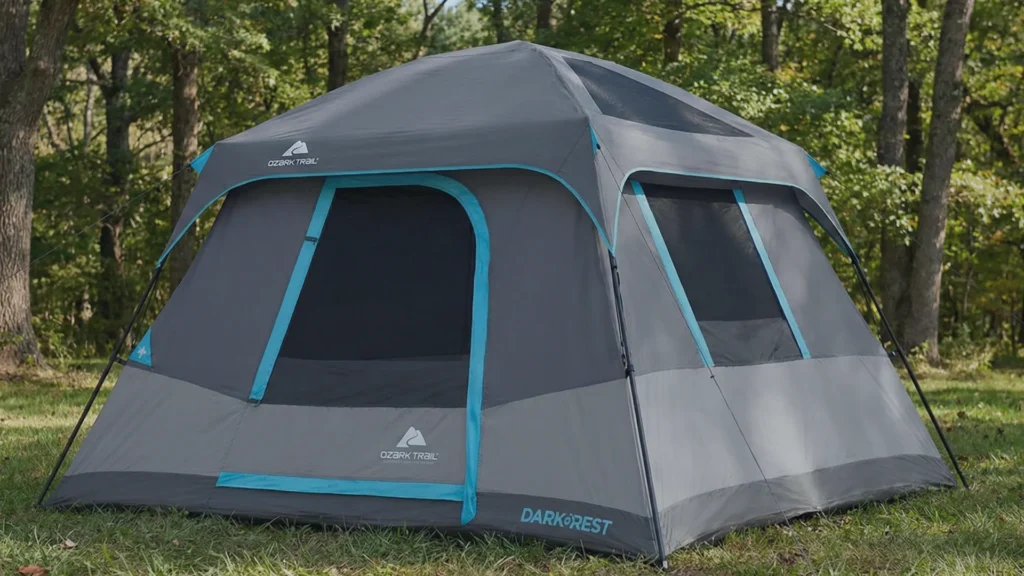
The Ozark Trail 6 Person Tent is at number 4 in our best camping tents list. It exists for one reason: accessibility. It is often priced lower than a tank of gas. If you are unsure if your family will even like camping, this is the low-risk entry point that gets you outdoors without emptying your savings account.
Technical Specifications
- Floor Size: 10 ft x 10 ft
- Center Height: 66 in (5.5 ft)
- Pole Type: Fiberglass
- Pack Weight: 12 lbs
- Rainfly: Partial (Top Only)
Architecture & Design
This is a basic “X-frame” dome. Two fiberglass poles cross in the middle. It is the simplest tent design in history. While it lacks advanced features, its simplicity is its strength. There is very little to break or get confused by during setup. The rainfly is minimal, covering just the very top mesh vents.
Field Notes: Performance & Living
- Materials: You get what you pay for. The fabric is thinner (usually 68D polyester), and the floor is a “crinkle” polyethylene tarp material. It is durable against abrasion but feels cheap. The fiberglass poles are standard grade, they will snap if a child falls on the tent.
- Weather: It is water-resistant, not waterproof. In a drizzle, you are fine. In a downpour, you will likely see misting or weeping seams. We strongly recommend sealing the seams yourself with a product like Seam Grip before your first trip. The lack of a full rainfly means you cannot keep windows open during rain.
- Space: Fits one queen mattress with gear comfortably. Two queens leave zero floor space. The walls slope significantly, so it feels smaller than the Skydome despite having a similar footprint.
Verdict
Perfect for backyard campouts or fair-weather festivals. Not for serious wilderness use. Think of it as a disposable tent that might surprise you by lasting a few seasons if treated well.
Read the full review: Ozark Trail 6 Person Tent Review
Best Camping Tents for Small Families & Couples
If you are figuring out what to pack when camping and have limited trunk space, these tents hit the sweet spot between comfort and packability. They offer enough room for two people to live luxuriously or a small family to sleep snugly.
5. Gazelle T4 Hub Tent
Category Winner: Best Pop-Up Hub Tent
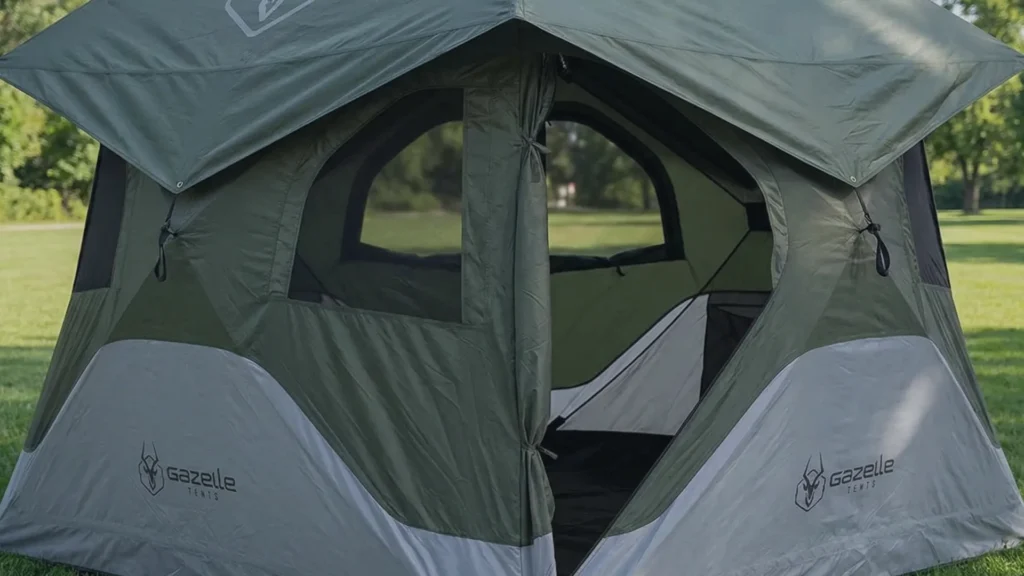
The Gazelle T4 Hub Tent is at number 5 in our best camping tents list. It’s built for the “Overlanding” community, people who drive modified Jeeps into the desert and need gear that lasts. It is a tank compared to the plastic feel of budget tents and has gained a cult following for its durability.
Technical Specifications
- Floor Size: 94 in x 94 in
- Center Height: 78 in (6.5 ft)
- Pole Type: Fiberglass/Metal Hubs
- Pack Weight: 30 lbs
- Pack Length: 68 inches (Over 5 ft)
Architecture & Design
Unlike the “instant” mechanism of the Core tent, the Gazelle uses a Hub system. Each wall has a central hub. You pull a handle, and the wall pops out under tension. It feels robust and snappy. The fabric is a thick 210-denier oxford weave, which is roughly 3x thicker than the fabric on a Coleman tent. It is completely waterproof without a rainfly (though a rainfly is included for the roof).
Field Notes: Performance & Living
- Geometry: It is a perfect cube. The walls are 100% vertical. This maximizes every inch of the floor plan. It is 78 inches tall throughout the entire tent, not just the center. You can stand in the corner just as easily as the middle.
- Cleaning: The floor is removable via a heavy-duty velcro strip. This is a brilliant feature for sweeping out sand and dirt after a beach trip, something impossible in standard tents where dirt gets trapped in corners forever.
- The “Long” Problem: Because of the hub design, it packs down into a bag that is over 5 feet long. It will not fit in the trunk of a sedan; you need a roof rack, a truck bed, or a pass-through in your SUV seats.
- Thermal Properties: Because the fabric is so thick, it blocks light and heat better than standard nylon tents, allowing you to sleep in past sunrise.
Verdict
The premium choice for frequent campers who prioritize durability and speed over pack size. If you have the vehicle space, this is the best tent on this list for durability.
Read the full review: Gazelle T4 Hub Tent Review
6. Coleman Sundome 4 Person Tent
Category Winner: Best Budget Starter Tent
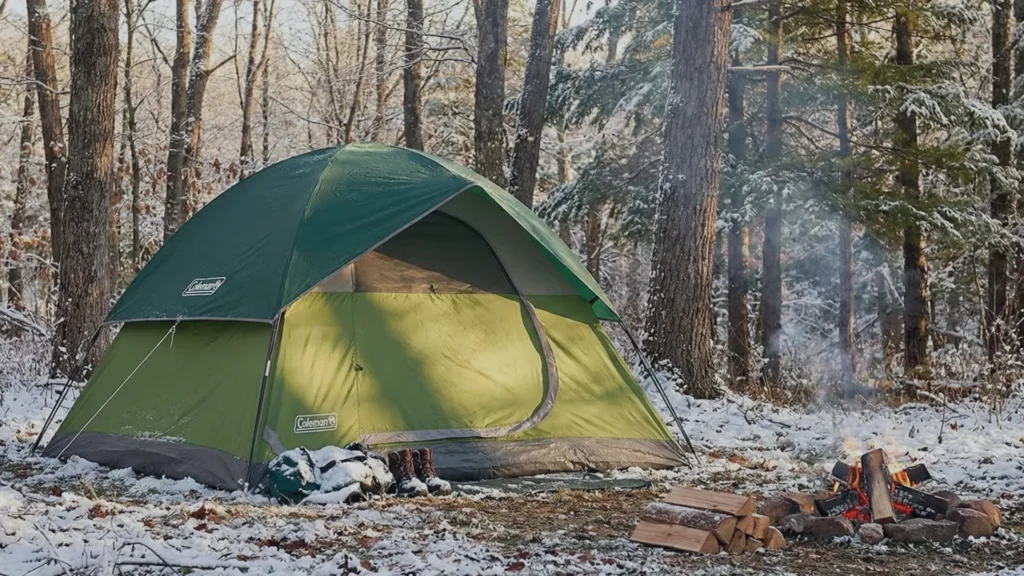
The Coleman Sundome 4 is at number 6 in our best camping tents list. It’s the “Honda Civic” of tents: reliable, cheap, and ubiquitous. It is the gold standard for “good enough.” It has likely introduced more people to camping than any other tent in history because it simply works.
Technical Specifications
- Floor Size: 9 ft x 7 ft
- Center Height: 59 in (4.9 ft)
- Pole Type: Fiberglass
- Pack Weight: 9.8 lbs
- Port: E-Port included
Architecture & Design
The Sundome has survived for decades because the design is fundamentally sound. It uses a partial rainfly that covers the mesh windows like an awning. This allows you to keep windows open for ventilation even during light rain, a feature many full-rainfly tents lack because they require you to zip everything up to stay dry.
Field Notes: Performance & Living
- Ventilation: It has two large windows and a dedicated ground vent. Airflow is excellent, reducing the “greenhouse effect” in the morning.
- Space: It is marketed as a 4-person, but realistically a perfect 2-person tent with space for gear. Do not try to fit 4 adults unless you are very comfortable with each other. It fits one queen mattress with almost no room to spare.
- Height: Peak height is 59 inches. You will be kneeling or crouching, not standing. This makes changing clothes a bit of a yoga exercise.
- Durability: The pole sleeves are continuous (snag-free), and the tub floor is welded. It punches above its weight class for durability and can handle wind gusts up to 35 mph if properly staked.
Verdict
Ideally suited for couples, festival-goers, or scouts who need a reliable shelter on a budget. It is the safe bet for your first tent.
Read the full review: Coleman Sundome 4 Person Tent Review
7. Teton Sports Mesa Canvas Tent
Category Winner: Best Canvas Glamping Tent
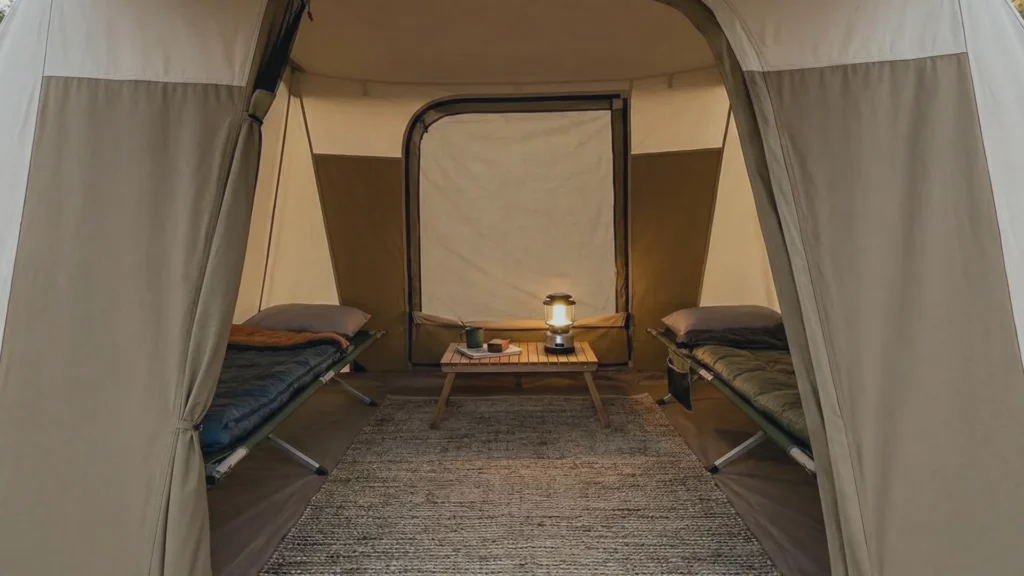
If you want to know how to stay warm camping in a tent during late fall, the answer is canvas. At number 7 in our best camping tents list, we have the Teton Sports Mesa Canvas Tent, a 4-season fortress that insulates far better than nylon. It transforms camping into glamping.
Technical Specifications
- Floor Size: 10 ft x 10 ft
- Center Height: 78 in (6.5 ft)
- Material: 100% Cotton Canvas
- Pack Weight: 68 lbs
- Structure: Flex-Bow Frame
Architecture & Design
Canvas is a completely different beast than polyester. It is heavy, thick, and breathable. In the summer, the fabric blocks the sun’s heat effectively (it is darker inside), keeping it cooler. In the winter, it traps body heat and blocks wind chill. The Mesa creates a microclimate that feels more like a house than a tent. It uses a flex-bow frame that is incredibly rigid against wind.
Field Notes: Performance & Living
- Weight: It weighs nearly 70 lbs. This is car-camping only. You need strength to lift it out of the car. It is not for the faint of heart.
- Maintenance: Canvas requires “seasoning” (wetting and drying) to swell the fibers and become waterproof before first use. It must be stored bone-dry to prevent rot. It is high maintenance, but high reward.
- Setup: Surprisingly easy for its size. You stake the corners, insert the roof rod, and push up the side poles. The top bar pushes up easily, though staking out the massive guy lines takes time and requires a large footprint.
- Features: It includes extra-large doors and high-quality zippers that feel industrial. The floor is a thick, rubberized material that you cannot puncture with normal use.
Verdict
A “buy it for life” investment for hunters, winter campers, or those looking for luxury.
Read the full review: Teton Mesa Canvas Tent Review
Best Backpacking & Solo Tents
Here, every ounce counts. These tents are designed to protect you in the backcountry without breaking your back. They sacrifice space and durability for lightweight performance and technical fabrics.
8. Naturehike Cloud Up 2
Category Winner: Best Budget Backpacking Tent
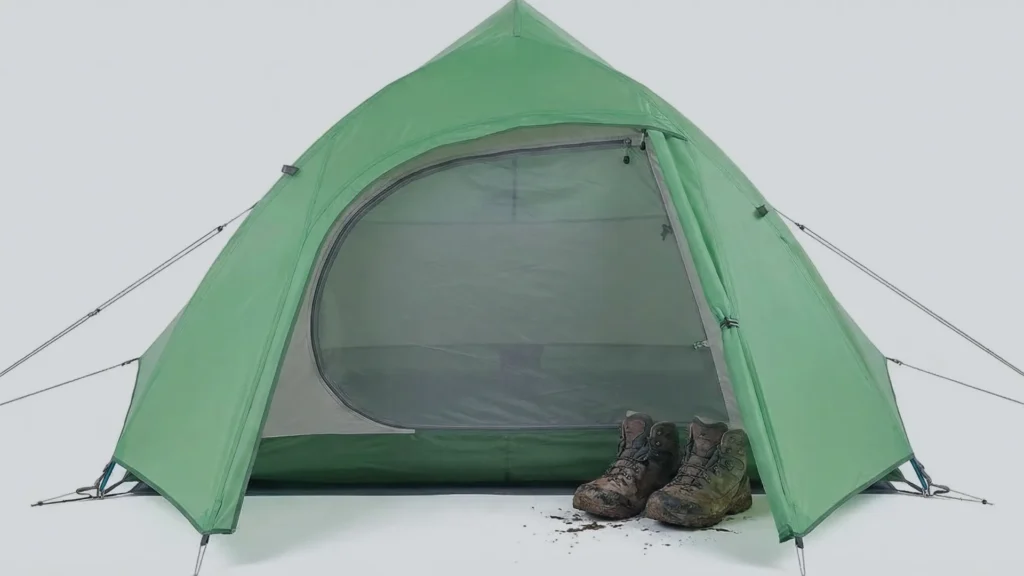
At number 8 in our best camping tents list, we have Naturehike Cloud Up 2. It disrupted the backpacking market by offering a legit ultralight design (strikingly similar to the Big Agnes Fly Creek) at a fraction of the price. It brought lightweight backpacking to the masses.
Technical Specifications
- Weight: 3.8 lbs (approx)
- Floor Size: 83 in x 49 in
- Peak Height: 40 in
- Fabric: 20D Silicone Coated Nylon
- Waterproof Rating: 4000mm
Architecture & Design
Backpacking tents usually cost $300-$500. Naturehike brought that down to the $150 range. It uses a “Y-frame” hub system where one pole splits into two at the rear. This makes it semi-freestanding and very fast to pitch. The steep walls at the front provide decent headroom for sitting up.
Field Notes: Performance & Living
- Materials: It uses 20D silicone-coated nylon (silnylon). This fabric is slippery, extremely lightweight, and has a high hydrostatic head rating (4000mm+). It is more waterproof than most Coleman tents. However, silicone fabric can sag slightly when wet, so you may need to re-tension the fly in the rain.
- Entry: It uses a single front door. This means if you share it with a partner, one person has to crawl over the other to exit. It is best used as a palatial solo tent for a hiker and their dog/gear.
- Durability: The materials are thin (to save weight). You need to treat the zippers gently and clear the ground of sharp rocks. However, a footprint is often included, which adds immense value and protection.
Verdict
The best value in backpacking. Professional-grade specs at an amateur price.
Read the full review: Naturehike Cloud Up 2 Review
9. Naturehike Cloud Up 1
Category Winner: Best Solo Ultralight
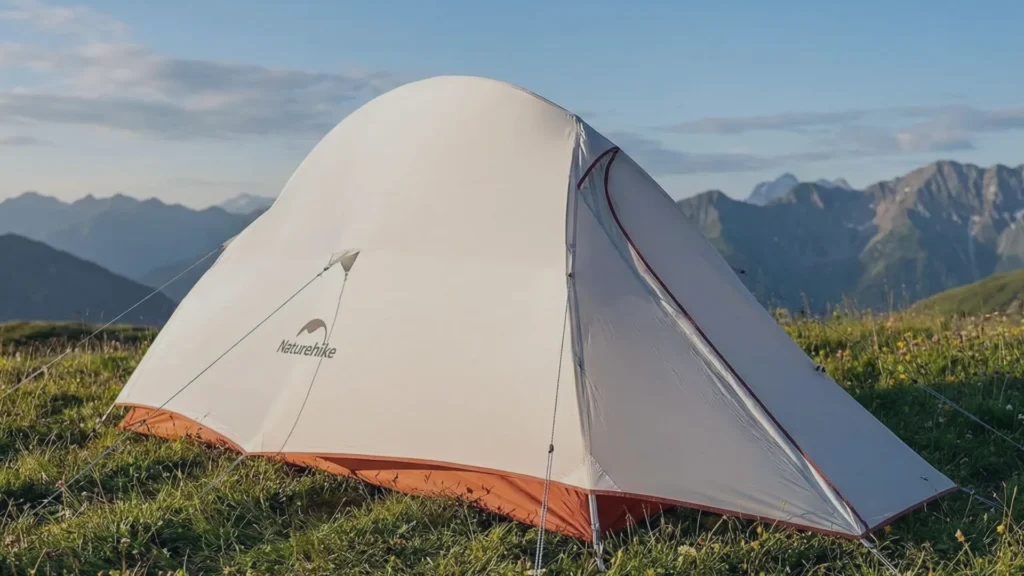
The Naturehike Cloud Up 1 is at number 9 in our best camping tents list. It’s the minimalist version of the Cloud Up 2. It strips away everything unnecessary to shave weight down to the absolute minimum.
Technical Specifications
- Weight: 3.3 lbs
- Floor Size: 83 in x 43 in (tapers at feet)
- Peak Height: 39 in
- Fabric: 20D or 210T options
- Structure: Front Entry
Architecture & Design
This tent is for the hiker who counts grams. It packs down to the size of a large water bottle. Despite its small size, it offers a full double-wall design (mesh body + rainfly), meaning you don’t have to deal with condensation dripping on your face like in single-wall bivy sacks.
Field Notes: Performance & Living
- Space: It is tight. You cannot bring your backpack inside; it must stay in the vestibule. Sit-up height is limited near the foot end. It is essentially a coffin with a view, but a very secure one.
- Stability: It is not fully freestanding; you must stake out the foot end to give it volume. However, its low profile sheds wind effortlessly.
- Weather: Like its big brother, the silicone-coated fly sheds water aggressively. It handles storms well if pitched foot-into-the-wind to slice through the gusts.
Verdict
For the solo adventurer who counts grams but refuses to sleep in a bivy bag.
Read the full review: Naturehike Cloud Up 1 Review
10. ALPS Mountaineering Lynx 1
Category Winner: Best Beginner Solo Freestanding
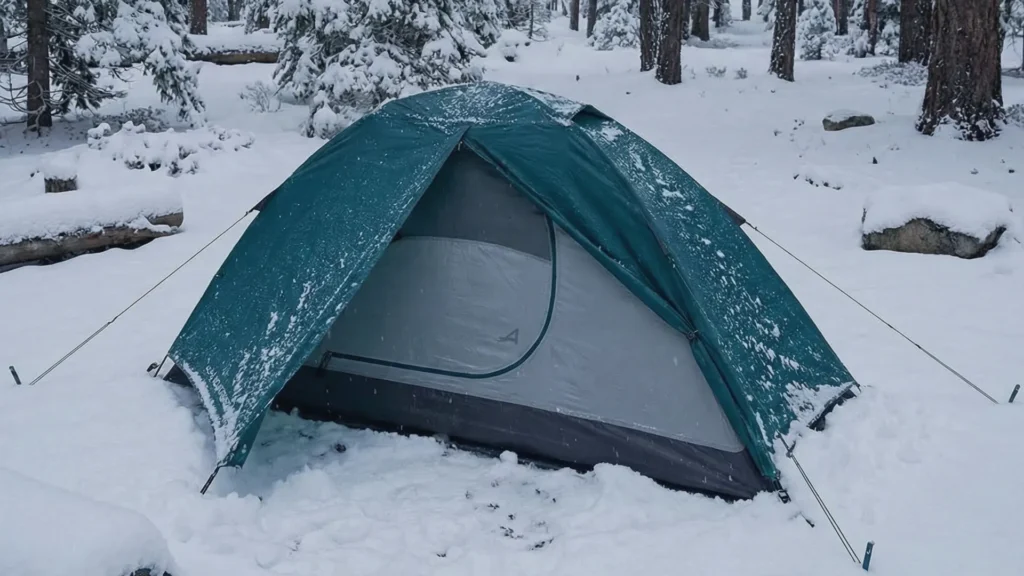
The last on our best camping tents list is the ALPS Mountaineering Lynx 1, a classic Scout tent. Unlike the delicate Naturehike, this is built to withstand abuse, rocks, and teenagers.
Technical Specifications
- Weight: 4 lbs 1 oz
- Floor Size: 7 ft 6 in x 2 ft 8 in
- Peak Height: 36 in
- Fabric: 75D Polyester
- Zippers: https://www.google.com/search?q=%238 Heavy Duty
Architecture & Design
It is fully freestanding, you can pitch it on solid rock, sand, or a wooden platform without stakes. It uses thick polyester fabrics and heavy-duty zippers. It prioritizes durability over weight. It follows a simple two-pole crossing design that is intuitive for anyone.
Field Notes: Performance & Living
- Vestibule: Surprisingly large side vestibule allows you to store boots and a pack completely covered, keeping them dry but outside the sleeping area.
- Ventilation: Half-mesh walls provide privacy while allowing decent airflow. It is warmer than the all-mesh Naturehike, making it better for shoulder seasons (Spring/Fall).
- Ease: The two-pole cross design is the simplest setup mechanism in existence. It can be set up in the dark by feel.
- Weight: At around 4 lbs, it is heavy for a solo tent. It is better for short backpacking trips or solo car camping where weight is less critical.
Verdict
Ideal for Boy Scouts, beginners, or solo car campers who prioritize durability over ultralight weight.
Read the full review: ALPS Mountaineering Lynx 1 Review
The Science of Best Camping Tents (Advanced Buying Guide)
To truly choose the best camping tents, you need to understand the technology behind the nylon. Understanding this section will help you know if tent camping is safe in various weather conditions.
1. Fabric Physics: Denier & Hydrostatic Head
You will see specs like “75D 190T”. Here is what that actually means.
- Denier (D): The physical weight/thickness of the thread.
- 20D (Naturehike): Ultralight, slippery, requires care. Used in backpacking.
- 68D/75D (Coleman, Core): Standard tent fabric. Good balance of weight and durability.
- 150D/210D (Gazelle, Canvas): Heavy duty. Hard to tear, heavy to carry.
- Thread Count (T): The density of the weave. 190T means 190 threads per square inch. Higher density generally means better water resistance.
- Hydrostatic Head (mm): A lab test measuring how much water pressure the fabric holds back before leaking.
- <1000mm: Water resistant (Ozark Trail). Okay for mist/light rain.
- 1200-2000mm: Waterproof (Coleman, Core). Standard rain protection.
- 3000mm+: Expedition (Naturehike). Handles driving storms and pressure (kneeling on the floor).
2. Pole Material: The Skeleton
- Fiberglass: The budget standard. Heavy and flexible. Warning: If they break, they shatter/splinter and ruin the fabric. Handle with care in cold weather as they become brittle.
- Aluminum: Found in backpacking tents. Strong, light, and bends rather than snaps. Easy to repair in the field with a splint.
- Steel: Used in cabin tents (Core/WeatherMaster). Heavy and rigid. Will withstand almost anything but adds massive weight to the bag.
3. Pole Geometry & Wind Handling
- Dome: Strong against wind because wind flows over the curve. Generally offers less habitable space due to sloping walls. Best for storms.
- Cabin: Excellent habitable space with vertical walls (like the Core 9). Poor wind resistance as the flat walls catch the wind like a sail. Best for comfort.
- Tunnel/Hoop: Maximizes space-to-weight ratio but relies entirely on stakes (not freestanding).
4. Seasonality Explained
- 3-Season: 95% of tents. Designed for Spring, Summer, Fall. They feature heavy mesh for ventilation. They will not hold snow loads.
- 4-Season: Designed for Winter. Minimal mesh to trap heat. Strong pole structures to support snow loads. Heavier and hotter in summer. Do not buy a 4-season tent for July camping; you will roast.
Best Camping Tents Maintenance & Pro Tips
The best camping tents last 15 years; a neglected one lasts one season. Here is how to keep your gear alive and functional.
The Cardinal Rule: Dry It Out
Never, ever store a tent wet. Mildew digests the waterproof polyurethane coating (PU coating). The fabric will smell like vomit and become sticky (delamination). If you must pack up wet, set it up in your yard immediately when you get home to air dry. See our guide on how to clean a tent with mold if you messed this up.
Seam Sealing
Budget tents (Ozark Trail/Coleman) often have “taped” seams, but tape can peel over time. We recommend applying a liquid seam sealer (like Seam Grip WP) to the floor corners and fly seams before your first big trip. Apply it to the inside of the rainfly for best results. This small $10 investment can save your trip.
Zipper Care
Dirt is the enemy. If camping on sand, shake out the zippers daily. Rubbing a little candle wax or zipper lube on the teeth can keep them running smooth. Never force a stuck zipper; you will separate the teeth. Use two hands: one to pull the zipper, one to hold the fabric taut.
Site Selection 101
- The 3 W’s: Wind, Water, Widowmakers.
- Wind: Point the lowest/narrowest part of your tent into the wind to reduce drag.
- Water: Avoid depressions in the ground. Water pools there. Look for high, flat ground.
- Widowmakers: Never pitch under dead branches. They can fall and kill you.
- The Door Direction: Pitch your door facing the sunrise for a warm wake-up, or away from the sunrise if you want to sleep in.
Essential Accessories Checklist
Buying the best camping tents is just step one. Here are the upgrades you need to make your trip successful.
- Heavy Duty Stakes: The stakes that come with your tent are usually cheap metal wires (“shepherd’s hooks”) that bend instantly. Upgrade to steel nail stakes for car camping or MSR Groundhogs for backpacking. They hold better and don’t bend.
- Mallet: Do not use a rock to pound stakes; you will bend them. A rubber mallet is essential for driving stakes into hardpacked campground soil.
- Footprint: A footprint protects the waterproof floor of your tent from rocks, sticks, and abrasion. It is much cheaper to replace a $20 tarp than a $300 tent. For budget tents, a simple blue tarp from the hardware store works fine, just tuck the edges under the tent so they do not funnel rain underneath.
- Repair Kit: Always carry Tenacious Tape for fabric tears and a pole splint (a small metal tube) for broken fiberglass poles. Duct tape works in a pinch but leaves a sticky residue.
- Tent Carpet: For larger family tents like the WeatherMaster, an indoor/outdoor rug or specific tent carpet makes the living space much warmer and more comfortable for bare feet.
Best Camping Tents FAQ
Technically, yes, if everyone sleeps shoulder-to-shoulder on narrow pads like sardines. Practically, no.
- The Golden Rule: Capacity – 2 = Comfort.
- A 4-person tent is comfortable for 2 people + gear.
- A 6-person tent is comfortable for 4 people.
- If you are using large cots or air mattresses, you may need an 8-10 person tent for a family of 4.
Yes, but with extreme caution. Gas heaters produce carbon monoxide, which is deadly. Only use heaters rated for indoor use (like Mr. Heater Buddy) and ensure you have massive ventilation (keep windows cracked). We discuss this thoroughly in our guide on how to stay warm camping in a tent.
- Instant Tents (Core): Have heavy telescoping poles permanently attached. You extend them manually to set up. They are sturdy.
- Pop-Up Tents: Use tension loops (like a car sunshade) or spring-loaded hubs. They “pop” into shape immediately but are often less durable and harder to fold back up.
- Budget Domes (Coleman): ~30-35 mph if properly guied out.
- Cabin Tents (Core): ~20-25 mph. Their flat sides catch wind.
- Backpacking Tents (Naturehike): ~40-50 mph due to low profile and aerodynamics.
Absolutely. Many RV sites allow tents, and tents like the Coleman WeatherMaster 6 are large enough to fit in well at these parks. However, the ground might be gravel, so bring a heavy footprint. We cover this in depth in can you tent camp in an rv site.
Most new tents come with a factory coating (DWR) and sealed seams. However, budget tents (like Ozark Trail) often have weak points. It is good practice to set up your new tent in the yard, check the seams, and maybe apply a seam sealer to the floor corners just to be safe.
Ventilation is key.
- Remove the rainfly during the day if it’s not raining.
- Pitch your tent in the shade (this makes a 10-15 degree difference).
- Orient the tent so the main mesh windows face the prevailing wind.
- Use a battery-powered fan to circulate air.
Final Verdict: Which Tent Should You Buy?
The best camping tents are the ones that get you outdoors. There is no single “perfect” tent, but there is a perfect tent for you.
For the “I Just Want to Relax” Parent
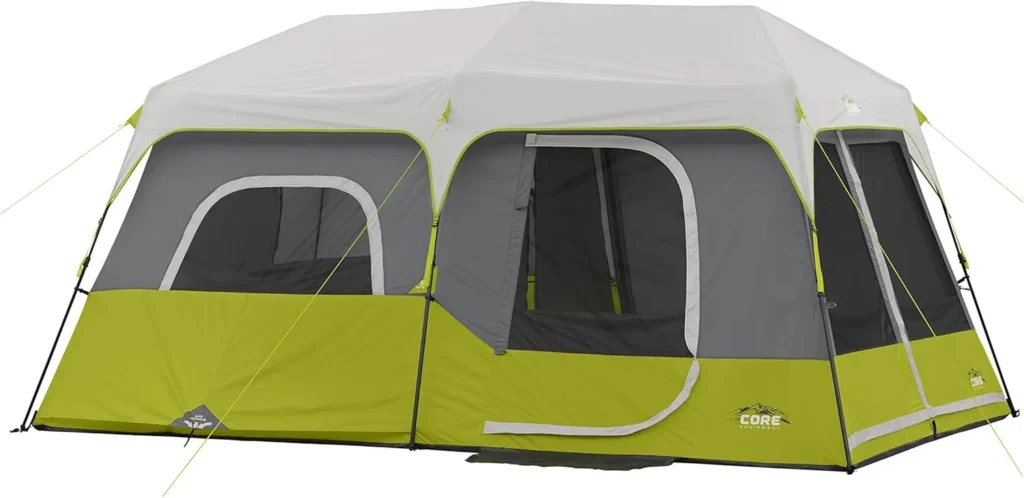
It eliminates the frustration of setup so you can start enjoying the campfire immediately.
For the Mosquito Hater
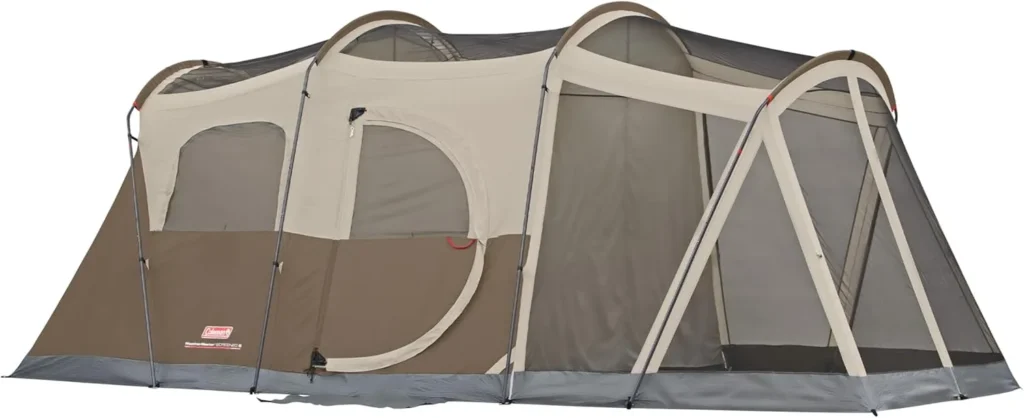
The porch is a sanctuary. It allows you to enjoy the outdoors without being a buffet for bugs.
For the Aspiring Backpacker
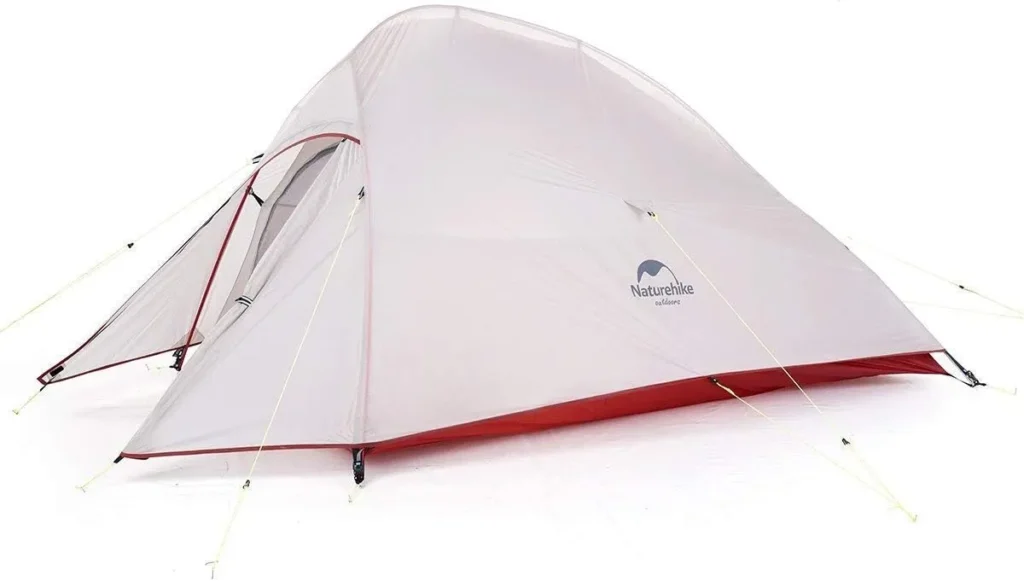
It is high-end performance at a budget price. It is the perfect gateway drug into lightweight camping.
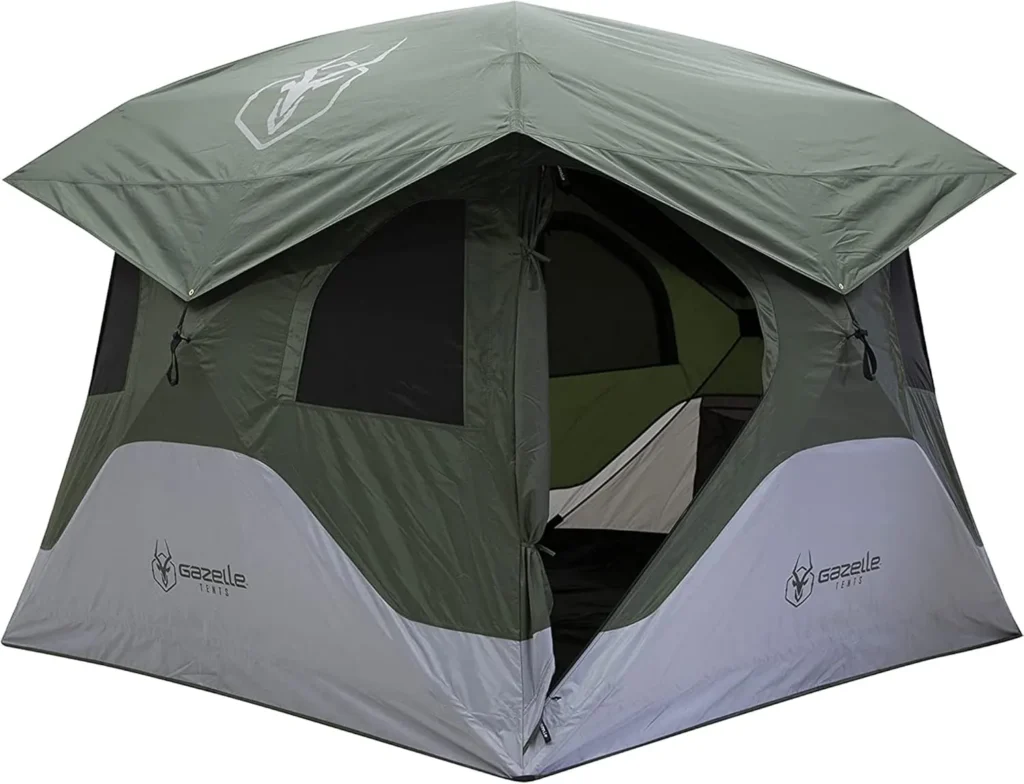
For the “Buy Once, Cry Once” Crowd
Buy the Gazelle T4 Hub or Teton Mesa Canvas. They are investments in your future trips. They are heavy, but they will last for years and provide superior comfort.
Whatever you choose, remember that the tent is just the tool. The adventure is what matters. Check out our guide on how to plan a camping trip to get started on your next journey.