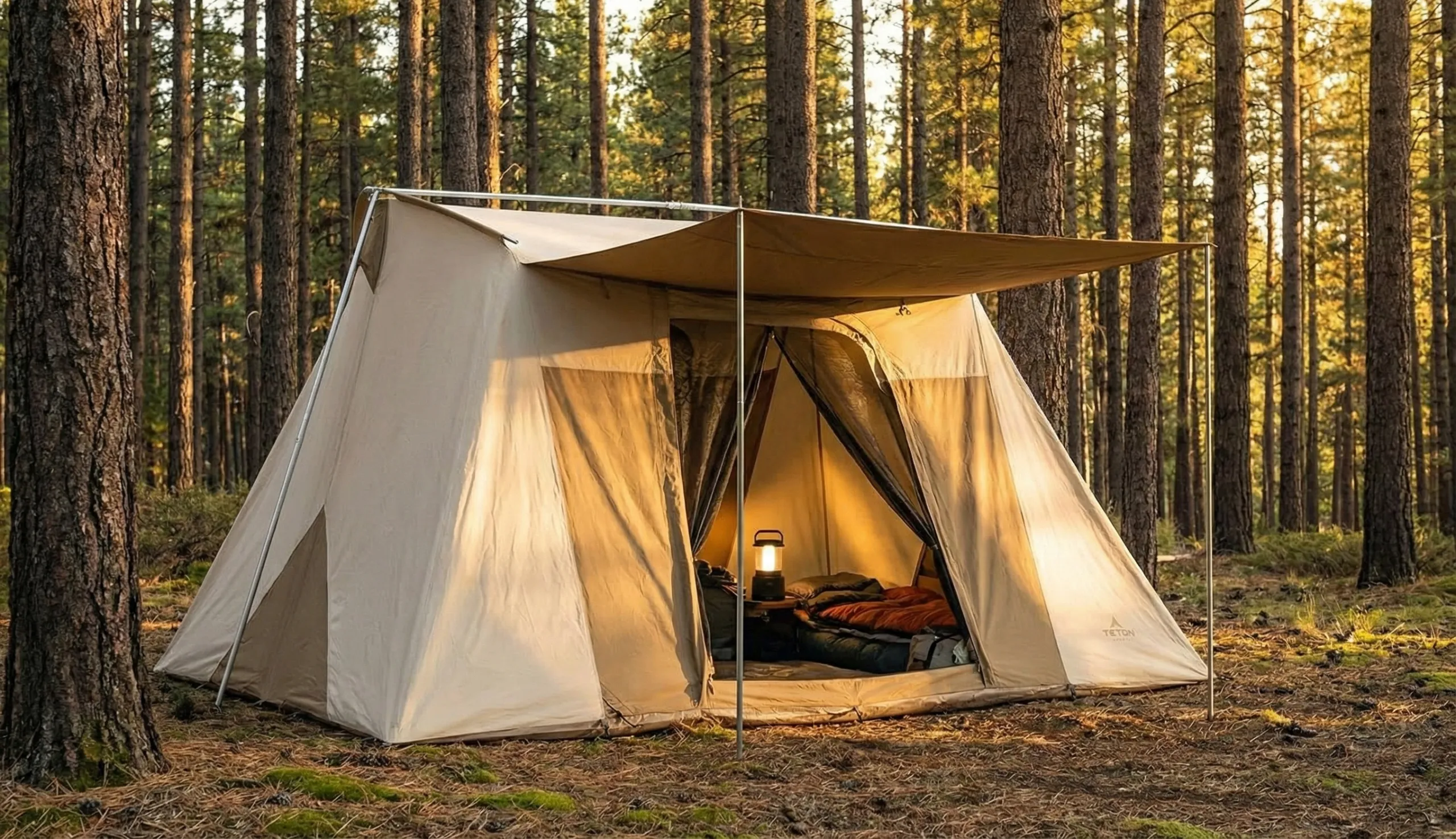

Every camper knows the struggle. You spend months planning, only to wake up at 2:00 AM to the sound of a nylon tent flapping violently in the wind. This is the specific problem the Teton Mesa canvas tent aims to solve. It promises to bridge the gap between a flimsy weekend shelter and a permanent cabin, offering breathable walls that don’t sweat and a structure that laughs at wind gusts.
But is a heavy, steel-framed canvas beast really capable of delivering a premium camping experience for the average family? Is it worth lugging 70+ pounds of gear from your car to the campsite? Can it truly withstand a torrential downpour, or will it leak like a sieve if you don’t treat it right? I have taken a deep dive into the specs, user experiences, and structural design of this popular shelter to find out.
In this comprehensive Teton Mesa tent review, I will break down everything you need to know about this product. We will cover the unique “quick-up” frame, the pros and cons of 100% cotton canvas, and how it compares to heavy-hitting competitors like the Kodiak Canvas Flex-Bow and the Gazelle T4 Hub Tent.
Whether you are planning a week-long deer hunt or a luxury glamping getaway with the family, this review will help you decide if the Mesa is the right fortress for you.
Quick Verdict
The Teton Mesa Canvas Tent is a phenomenal choice for car campers, hunters, and families who are tired of replacing cheap tents every few seasons. The 100% cotton canvas material genuinely works, creating a breathable, quiet, and temperature-regulated environment that synthetic tents simply cannot match. The extra-wide doors are a standout feature, making gear loading effortless.
However, it is not perfect. It is exceptionally heavy (over 70 lbs), making it strictly a “drive-up” camping tool. It also requires a “seasoning” process before first use to be fully waterproof, and setting it up solo requires some physical strength. But for the price, it offers a level of comfort and durability that justifies the effort.
- Weather Resistance: 4.8 / 5
- Ease of Setup: 3.5 / 5
- Livability/Space: 5 / 5
- Durability: 4.9 / 5
- Value for Money: 4.6 / 5
4.6
Overall Score
Pros
✓ Extra-Wide Doors: The massive D-shaped doors open almost the full width of the tent, making it incredibly easy to move large cots and tables in and out.
✓ Breathability: The cotton canvas eliminates the humid, “greenhouse” effect, keeping the tent cool in the day and warmer at night.
✓ Quick-Up Frame: The top bar assembly snaps together faster than traditional pole-threading designs found on cheaper cabin tents.
✓ Super-Duty Floor: The 19 oz interwoven polymer floor is thick and rubbery; you almost don’t need a footprint (though we always recommend one).
✓ Quiet: Canvas doesn’t crinkle or flap loudly in the wind, leading to much better sleep quality.
✓ Lifetime Warranty: Teton Sports backs their products with a limited lifetime warranty, a huge plus for a significant investment.
Cons
✕ Heavy & Bulky: Weighing over 70 lbs, this tent takes up significant trunk space and is a workout to move.
✕ Solo Setup Difficulty: While possible, lifting the heavy steel ridge pole into place can be a struggle for one person, especially if you are shorter.
✕ Seasoning Required: You cannot just buy it and use it in the rain immediately; you must wet it down and dry it to seal the needle holes first.
✕ Price: It is an investment compared to standard nylon tents, though cheaper than some canvas competitors.
Technical Specifications
| Feature | Specification |
|---|---|
| Product Name | Teton Sports Mesa Canvas Tent |
| Sizes Available | 10′ x 10′ / 10′ x 14′ |
| Weight (10×10) | ~71 lbs (32 kg) |
| Weight (10×14) | ~76 lbs (34 kg) |
| Shell Material | 100% Cotton Canvas (Waterproof Treated) |
| Floor Material | Super-Duty 19 oz Interwoven Polymer |
| Center Height | 6.5 ft (78 in) |
| Pole Material | Powder Coated Steel |
| Zippers | #10 SBS |
| Doors | 2 Extra-Large D-Style Doors |
| Windows | Mesh screens on both doors + Roof Vents |
| Power Access | 2 E-Ports |
| Warranty | Limited Lifetime |
| Pack Size | Approx. 39″ x 15″ x 15″ |
What is the Teton Mesa Canvas Tent?
The Teton Sports Mesa is not just a tent; it is a portable shelter designed for “Base Camp” style camping. It falls into the category of Canvas Cabin Tents. Unlike the NatureHike Cloud Up 2, which is designed to be carried on your back for miles, the Teton Mesa tent is designed to be thrown in the back of a truck or SUV and set up within 50 feet of your vehicle.
It targets a specific audience: The Comfort Maximizer.
If you are the type of camper who wants to sleep on a real cot, stand up while changing clothes, and wait out a storm playing cards at a table rather than huddled in a fetal position, this is the product category for you. Unlike a standard Teton Sports tent made of polyester, the Mesa utilizes heavy-duty cotton fibers that swell when wet to create a waterproof barrier. It is designed to last for decades, not just a few summers.
The design philosophy here is “Durability First.” Everything about it, from the #10 SBS zippers to the thick steel poles, is over-engineered. It is the antithesis of the “ultralight” movement. It embraces weight as a sign of quality.
Detailed Features Breakdown
To truly understand if this Teton Mesa tent review is positive or negative for your needs, we need to look at the components microscopically.
1. 100% Cotton Canvas Material
The skin of the Teton Sports tent is made from 100% treated cotton canvas. This is the heart of the Mesa. Synthetic fabrics like nylon and polyester are essentially plastic. When you sleep inside them, moisture from your breath condenses on the cold walls, creating a damp environment. Canvas breathes. Moisture escapes through the fabric weave, keeping the interior bone dry.
Furthermore, canvas is an insulator. On a hot day, a nylon tent becomes an oven. A canvas tent remains surprisingly cool, especially with the vents open. Conversely, when you are learning how to stay warm camping in a tent during the shoulder seasons, canvas retains your body heat (or heater warmth) significantly better than thin plastic.
2. The Super-Duty Floor
Most tents have a floor made of the same thin material as the walls, maybe slightly thicker. The Teton Mesa uses a 19-oz interwoven polymer floor. To give you a reference, this material feels more like the bottom of a whitewater raft than a tent floor. It is thick, rubbery, and incredibly tough.
This is crucial because when you are camping in an RV site that has a gravel pad, normal tent floors get chewed up. The Mesa’s floor can handle gravel, sticks, and the legs of heavy cots without puncturing easily. It allows you to walk around inside with boots on (though we recommend taking them off to keep it clean) without fear of tearing.
3. Extra-Wide Doors: The “Mesa” Difference
This is arguably the biggest selling point over its competitors. The Teton Mesa tent features two massive double doors, one in the front and one in the back. Unlike standard D-doors that require you to duck and squeeze, these doors open almost the entire width of the wall.
Why does this matter?
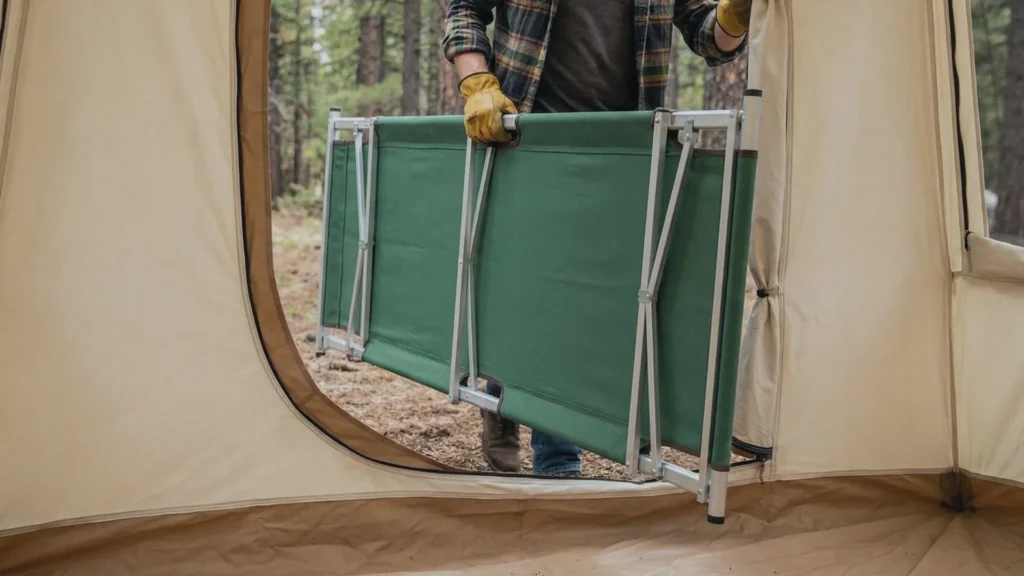
- Loading Gear: You can set up your cot outside and carry it in fully assembled. No more wrestling with cot legs inside a cramped space.
- Views: When both doors are unzipped to the mesh, you have a massive tunnel of view. It feels like an open-air pavilion.
- Airflow: The cross-breeze capability is unmatched.
4. The Quick-Up Steel Frame
The frame consists of a top ridge bar and two side upright assemblies. Teton markets this as a “quick setup,” and compared to an old-school wall tent with 20 poles, it is. However, compared to a Core 9 person instant cabin tent, it takes a bit more work.
The poles are heavy-duty steel. They don’t bend in the wind. The “quick” part comes from the top bar mechanism, which snaps together with push-buttons. Once the roof is assembled on the ground, you simply lift the sides and lock the legs in place. It is intuitive, but heavy.
5. Ventilation System
Aside from the massive doors, the Teton Sports Mesa features two roof vents in the upper eaves. These are critical. Because heat rises, these vents allow hot air to escape even when the doors are zipped shut for rain. The large “no-see-um” mesh on the doors keeps even the tiniest bugs out while allowing air to flow freely.
6. Storage and Organization
Canvas tents can sometimes be spartan, but Teton included thoughtful storage.
- Overhead Lofts: Great for drying socks or holding lights.
- Side Organizers: Multi-pocket organizers that hang from the frame are included. These are perfect for keys, phones, bear spray, and flashlights. Keeping gear off the floor is essential for organization.
7. Power Access
The tent includes built-in E-ports (electrical access ports). This allows you to run an extension cord from your car or a campsite pedestal into the tent without leaving the door unzipped. If you are bringing a heater or charging stations, this is a must-have feature.
Space and Liveability: Is It a Palace?
The Teton Sports tent comes in two sizes: the 10×10 and the 10×14. For this review, we are primarily focusing on the 10×10 model, but the principles apply to both.
The “Vertical Wall” Advantage
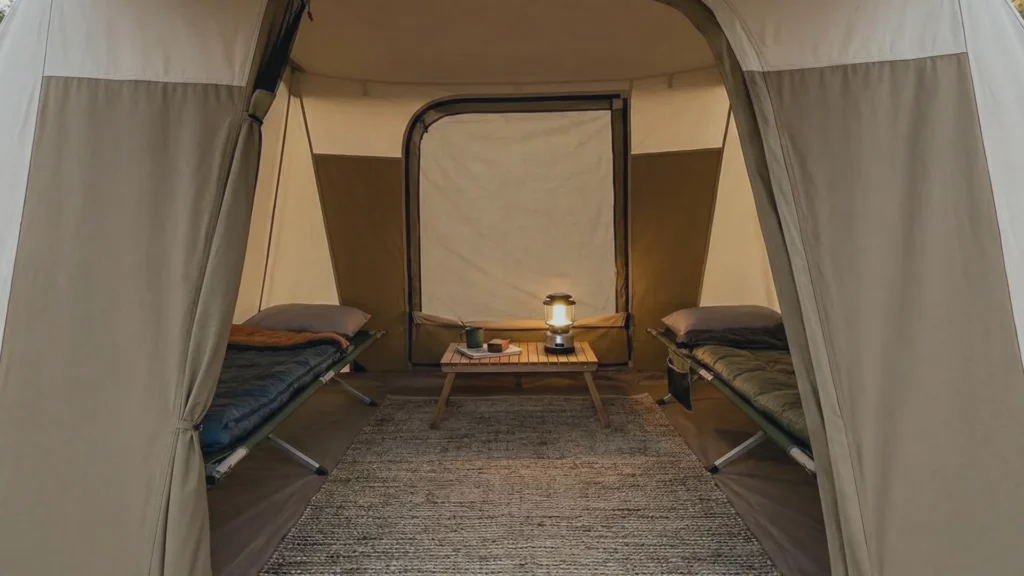
Unlike a Coleman Sundome 4 person tent, which has sloping dome walls, the Teton Sports Mesa is a cabin. The walls go almost straight up. This means the 100 square feet of floor space is 100% usable. You can push your cot right up against the canvas wall and sit up without your head hitting the fabric.
Real World Capacity Scenarios
The Couple (Glamping): For two people, the 10×10 Mesa is a palace. You can set up a Queen-sized air mattress or two XL cots pushed together. You will still have 4-5 feet of empty space at the foot of the bed for a table, two chairs, and a rug. It feels like a hotel room.
Scenario B: The Family of Four: This is the sweet spot. You can fit two sets of bunk cots (disk-o-bed style) against the side walls. This leaves a central aisle down the middle for changing and entering/exiting. It is comfortable and organized. If you use sleeping pads on the floor, you can fit 4 pads easily with room for duffel bags.
The Hunting Party (3 Adults): Three large adults on cots is the maximum comfortable limit for the 10×10. You would arrange them in a U-shape. Any more than three adults, and you will be tripping over each other’s gear. If you have 4+ adults, upgrade to the Teton Sports Mesa 14 (10×14 size).
Ceiling Height
The center height is 6.5 feet (78 inches). Unless you are an NBA player, you can stand up fully in the center and walk around. Being able to put your pants on while standing up is a luxury that transforms camping from a chore into a vacation.
Weather Resistance and Durability
The primary reason to buy a canvas tent is for its ability to withstand weather that destroys plastic tents.
Rain Performance: The Need for Seasoning
Out of the box, a canvas tent might leak. This panics new owners. You must season the tent.
- What is seasoning? It involves setting the tent up in your yard, soaking it thoroughly with a hose, and letting it dry completely in the sun. You should do this 1-2 times.
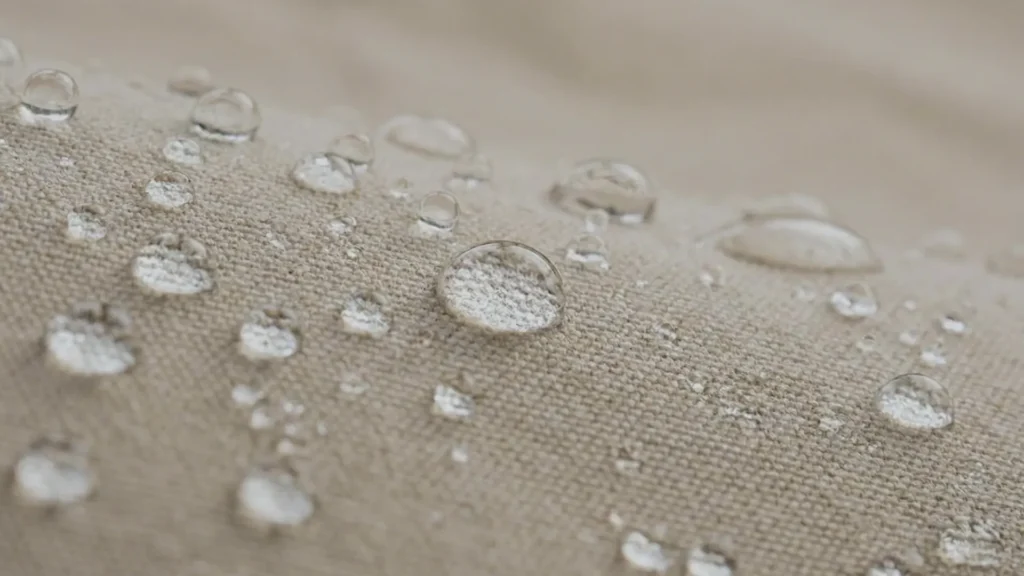
- Why? The cotton fibers absorb the water and swell, plugging the tiny needle holes created during manufacturing. Once seasoned, the Teton Mesa is incredibly waterproof. Rain beads off the surface.
- The result: I have seen reports of this tent sitting through 3-day storms where Coleman Skydome 6 person tent neighbors were flooded out, while the Mesa interior remained dusty dry.
Wind Performance
The steel frame is rigid. In high winds, nylon tents flex and bow. The Mesa stands its ground. However, because it is a large, flat-sided box, it catches the wind like a sail.
Crucial Step: You must use the guy lines. The tent comes with heavy-duty ropes and steel stakes. If you guy out the awning and the side walls properly, the tension holds the frame steady. It can withstand 30-40 mph gusts securely if staked properly.
Snow Load
While not an alpine expedition tent, the steep roof angle sheds snow well. The steel frame can support a moderate snow load, unlike fiberglass poles which snap. It makes for an excellent base camp for late-season elk hunting.
Durability
The zippers are oversized #10 SBS zippers. They are chunky and unlikely to snag or separate. The floor is reinforced. With proper care (drying it before storage), this tent can last 15-20 years.
Comparison: Teton Sports vs. The Competition
This is the most common question: “Why Teton over the others?”
Teton Mesa vs. Kodiak Canvas Flex-Bow
The Kodiak Flex-Bow is the legendary rival.
- Setup: The Kodiak uses a “Flex-Bow” spring rod system that is arguably slightly easier for one person to set up than the Teton’s ridge pole.
- Doors: Teton Wins. The Kodiak usually has two D-doors that are smaller. The Mesa’s doors are massive.
- Awning: Both have awnings, but Teton’s often feels slightly more integrated.
- Price: Teton is often priced $50-$100 less than the equivalent Kodiak, offering better value for money.
- Verdict: If you prioritize easy loading of gear and airflow, get the Teton Mesa. If you are strictly setting up solo 100% of the time, the Kodiak might be 5% easier.
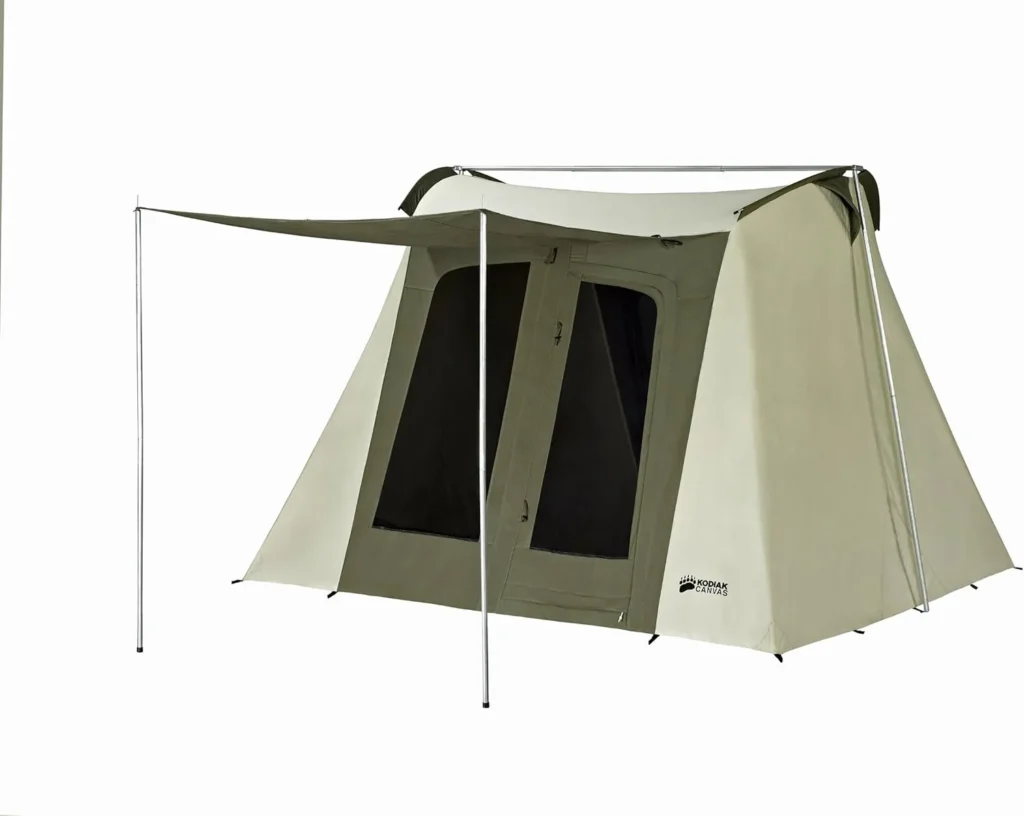
KODIAK CANVAS Family-Tents Kodiak Canvas Flex-Bow Deluxe Tent
Teton Mesa vs. Springbar
Springbar is the “original” canvas tent. They are iconic and some are made in the USA (Highline series is imported).
- Quality: Springbar finish is exquisite.
- Price: Springbar is significantly more expensive.
- Verdict: Unless you care about brand heritage or US manufacturing, the Teton Mesa offers 95% of the performance for 60% of the price.
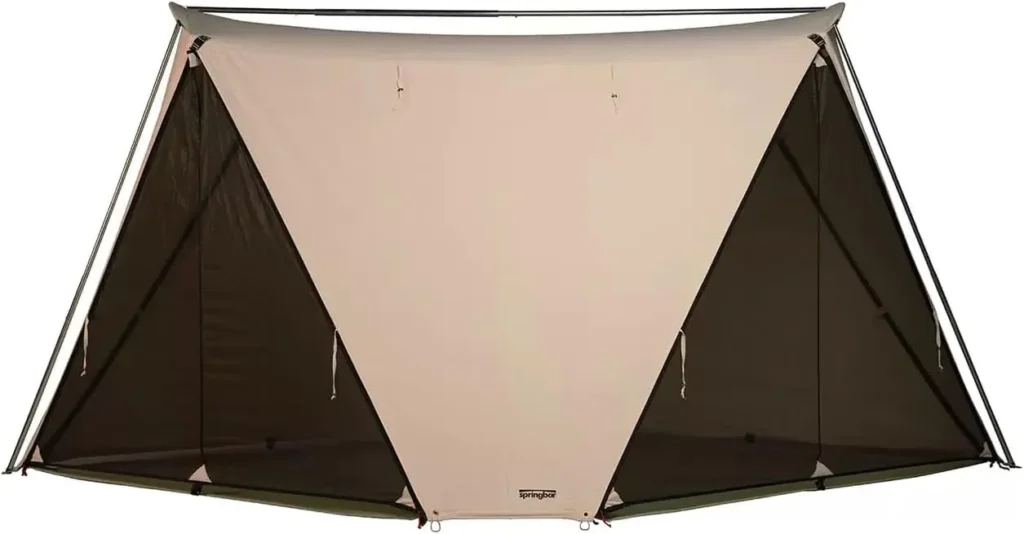
Springbar Leisure Port Canvas Canopy Shade Tent Convertible Pop-Up Shelter (Natural)
Teton Mesa vs. Synthetic Instant Tent (Ozark Trail)
Comparing the Mesa to an Ozark Trail 6 person tent is apples to oranges.
- Ozark Trail: Cheap, light, waterproof for a season or two, hot in summer. Good for festivals.
- Teton Mesa: Heavy, expensive investment, lasts a lifetime, superior comfort.
- Verdict: If you camp once a year, buy the Ozark Trail. If you camp 5+ times a year or want to camp in bad weather, buy the Teton.
This is the king of glamping. To see if a canvas tent is right for you compared to modern instant tents, read our best camping tents overview.
Who is this Teton Sports Mesa For?
The “Buy It For Life” Family
If you are tired of zippers breaking and poles snapping, this is for you. It is a one-time purchase that will see your kids grow up.
The Deer Camp Hunter
You need a tent that can handle mud, snow, and cold winds. You need space for gear totes and rifles. The Mesa is a hunter’s favorite for a reason.
The RV Alternative
If you are wondering, can you tent camp in an RV site, this tent is the answer. It commands respect at RV parks. It looks and feels like a semi-permanent structure. It is perfect for when you have too many guests for the RV and need a “guest house.”
Setup Guide: How to Wrestle the Beast
One of the main barriers to entry is the setup anxiety. Here is how to do it efficiently.
- The Foundation Lay down a ground tarp. Even though the floor is tough, a tarp keeps it clean. Unroll the tent. Stake down the four corners TIGHTLY. This is the most important step. If the floor isn’t taut, the frame won’t stand right.
- The Roof Assemble the steel ridge pole (the top bar). Slide it through the canvas sleeve on the roof. Connect the T-brackets at the ends.
- The Lift This is the workout. Assemble the upright poles. Go to one side, lift the T-bracket, and insert an upright pole. The tent will be half-standing. Go to the other side, lift, and insert the second upright pole.
- The Vibe Check Adjust the legs so they are vertical. Stake out the guy lines for the awning and the side vents.
- Interior Lay down a rug. We highly recommend a rug inside. It protects the floor and makes it feel cozy. Consult our guide on how to make tent camping more comfortable for more interior design tips.
Maintenance and Care: The Canvas Rules
Owning a canvas is like owning a cast-iron skillet. It requires specific care.
The Mold Enemy
If you pack this tent away wet, it will mold. Mold eats cotton. It will ruin the waterproofing and the smell will be awful. If you must pack up in the rain, you MUST set it up again in your garage or yard within 24 hours to dry out completely.
Resource: Read our guide on how to clean a tent with mold just in case, but prevention is key.
Zipper Care
The zippers are strong, but dust is the enemy. Keep them clean. Lubricate them with a silicone zipper stick once a season to keep them gliding smoothly.
Long Term Storage
Store the tent in a cool, dry place. Do not store it directly on a concrete floor as moisture can wick up. Keep it in the bag, off the ground.
Teton Mesa Tips for Best Use
To get the most out of this tent, you need to prepare differently than with a hiking tent.
- Bring a Mallet: The steel stakes are huge. You cannot push them in with your foot. You need a heavy rubber mallet. Check our list of what to pack when camping for other heavy-duty essentials.
- Carpet It: A 10×10 piece of indoor/outdoor carpet makes the tent silent and warm.
- Heater Safety: If you use a Buddy heater, ensure you crack the roof vents. Carbon monoxide is real, even in breathable canvas.
- Awning Management: The awning is great for shade, but in heavy rain, it can pool water. Lower one of the awning poles slightly to create a slope for runoff.
FAQ: Frequently Asked Questions
Technically, yes, it has a treatment, but Teton Sports (and all canvas manufacturers) strongly recommends “seasoning” it first. Without seasoning, you might see a fine mist or drips through the seams during the first hard rain.
No. The standard Mesa tent does not come with a built-in stove jack for a wood-burning stove. You would need to cut one in yourself and install a flashing kit (voiding the warranty) or look for a specific “hot tent” model. For heating, most users utilize propane heaters.
Yes, but it requires strength and technique. The steel ridge pole is heavy and lifting it above your head to insert the uprights can be tricky if you are short. It is remarkably easier with two people.
They are opposite ends of the spectrum. The Cloud Up 1 is for hiking miles into the backcountry. The Mesa is for driving to a spot and living like a king. Do not buy the Mesa if you have to carry it more than 100 yards.
While sturdier than nylon, a bear can still rip through canvas easily. Follow standard bear safety protocols. Read our guide: Is tent camping safe?
No, the Mesa has a sewn-in bathtub floor. This is better for keeping bugs, snakes, and water out, but means you cannot roll up the side walls like a bell tent.
Let it dry completely, then brush it off with a stiff bristle brush. Do not use harsh detergents or bleach as this will strip the waterproofing treatment. Use plain water or a specialized canvas cleaner.
Yes. While not a mountaineering tent designed for Everest, the canvas holds heat well and sheds snow. With a proper heater and sleeping system, it is a capable 4-season shelter for moderate winter conditions.
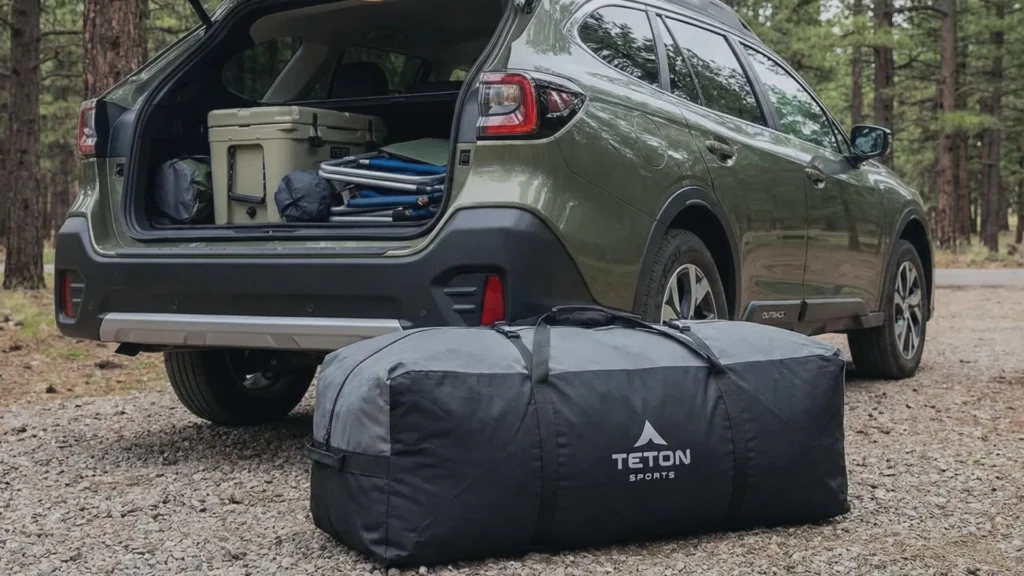
The packed bag is about the size of a large golf bag or a body bag (grim, but accurate size-wise). It fits in the trunk of most sedans, but measure first. It will take up most of a Honda Civic trunk.
The Mesa is a square cabin tent with a frame. The Sierra is a Bell Tent (tipi style) with a center pole. The Mesa offers more usable corner space; the Sierra is arguably prettier and easier to set up but has less headroom at the edges.
Wrapping Up
The Teton Mesa Canvas Tent is a throwback to an era when gear was built to last. It rejects the modern obsession with “ultralight” in favor of “ultra-comfortable.”
It transforms the camping experience. Instead of surviving the night, you enjoy it. You sleep past sunrise because the thick canvas blocks the light. You wake up dry because the breathability manages condensation. You walk out the massive doors without crouching.
If you are planning how to plan a camping trip that involves staying in one spot for several days, this tent is worth every penny and every pound of weight. It is not just a tent; it is a portable cabin that will become the centerpiece of your family’s outdoor memories.
See you on the trails!